
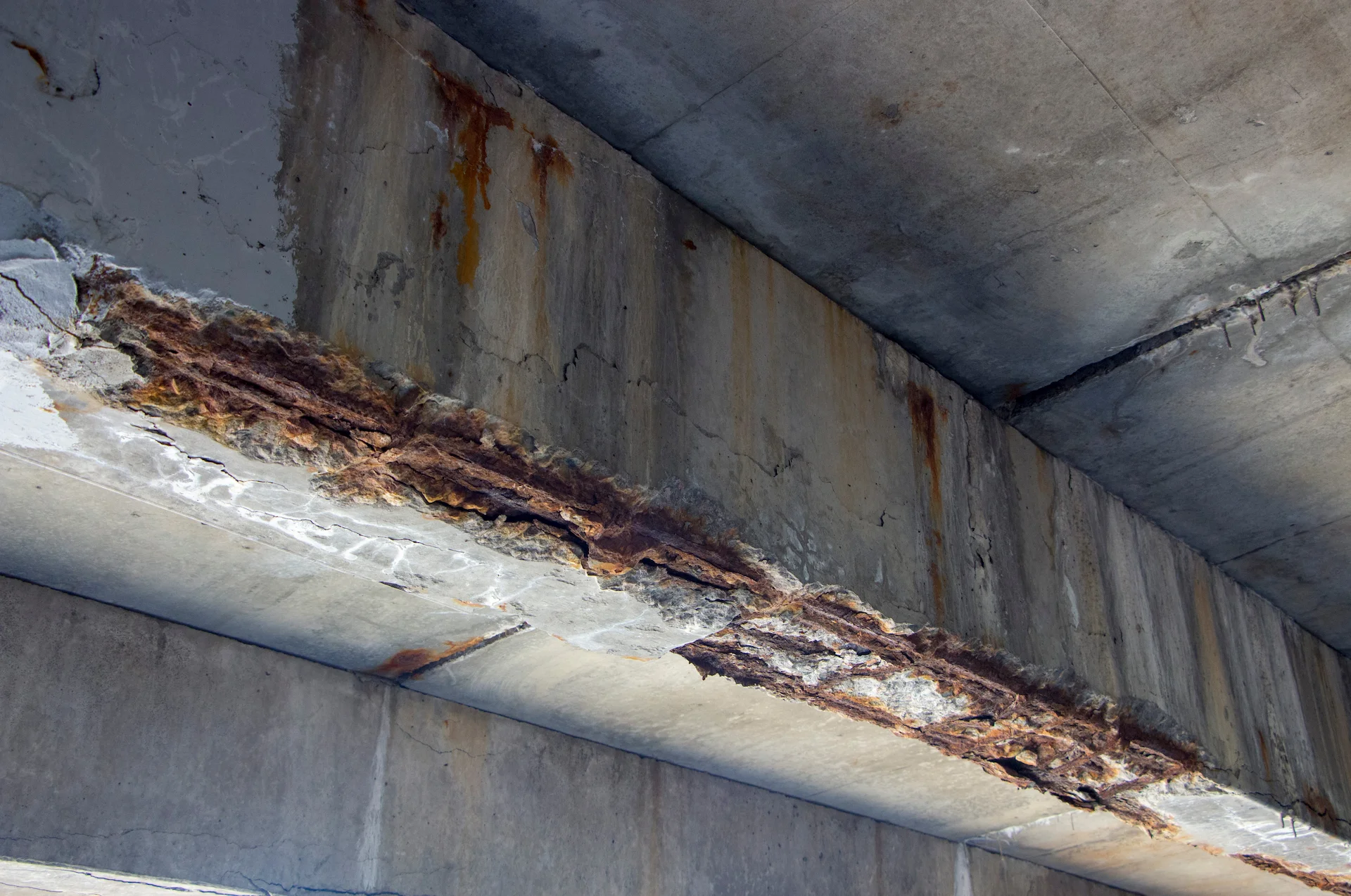
In New England, parking structures and subgrade levels take a beating. Between freeze–thaw cycles, road salts, heavy precipitation, and aging infrastructure, water infiltration isn’t a possibility — it’s a probability.
At ESI Waterproofing & Masonry Restoration Inc., we specialize in identifying, repairing, and preventing water infiltration before it compromises your asset value or triggers expensive emergency repairs.
Water infiltration in parking structures is not just cosmetic. Left untreated, it leads to:
- Concrete spalling
- Corroded rebar
- Structural weakening
- Mold growth in subgrade spaces
- Tenant complaints and liability exposure
Common Causes of Water Infiltration in Parking Structures
1. Failed Expansion and Control Joints
Expansion joints are designed to accommodate structural movement. Over time, joint sealants deteriorate, shrink, or separate.
In parking decks, failed joints allow water and chlorides to penetrate directly into the slab system — accelerating corrosion of embedded steel.
New England’s harsh winters make joint failure one of the leading causes of garage leaks.
2. Cracked or Deteriorated Concrete Slabs
Concrete is porous by nature. When surface sealers fail or cracks develop, water infiltrates and reaches reinforcement.
Common causes include:
- Thermal expansion and contraction
- Overloading
- Settlement
- Poor original installation
Once water reaches rebar, corrosion expands internally, causing delamination and spalling.
3. Inadequate Waterproofing Membranes
Many older New England parking structures lack modern traffic-bearing waterproofing membranes.
When membranes:
- Delaminate
- Crack
- Wear thin from traffic
- Were never installed
Water infiltrates directly into the slab.
In subgrade levels, failed blindside or negative-side waterproofing systems allow groundwater intrusion through foundation walls.
4. Poor Drainage and Clogged Systems
Blocked drains, improperly pitched slabs, and undersized drainage systems cause standing water.
Standing water increases:
- Surface deterioration
- Hydrostatic pressure
- Slip hazards
- Chloride penetration
Regular inspections and cleaning are critical for compliance and safety.
5. Failed Foundation Wall Waterproofing
Subgrade mechanical rooms and storage areas often show the first signs of infiltration.
Causes include:
- Cracked foundation walls
- Failed exterior waterproofing membranes
- Improperly sealed penetrations
- Hydrostatic pressure buildup
New England soils — especially in coastal Massachusetts — can retain moisture year-round, increasing pressure against foundation systems.
Why Property Managers Across Massachusetts Trust ESI Waterproofing & Masonry Restoration Inc.
At ESI Waterproofing & Masonry Restoration Inc., we provide:
- Comprehensive parking structure inspections
- Concrete repair and structural restoration
- Expansion joint replacement
- Traffic-bearing waterproofing membrane systems
- Below-grade waterproofing solutions
- Masonry restoration and sealing
We understand New England’s climate, Massachusetts building codes, and the operational pressures commercial property managers face.
Protect Your Parking Structure Before Minor Leaks Become Major Structural Issues
If your property in Massachusetts or anywhere in New England shows signs of:
- Active leaks
- Efflorescence
- Rust staining
- Concrete cracking
- Spalling
- Damp subgrade walls
It’s time for a professional evaluation.
Schedule a parking structure assessment today with ESI Waterproofing & Masonry Restoration Inc.
Preventative restoration today protects your structure, your tenants, and your capital budget tomorrow.