
When it comes to commercial real estate in New England, due diligence goes far beyond financials and tenant rolls. Increasingly, property managers, asset managers, and commercial owners are being scrutinized on the physical condition of the building envelope—and exterior maintenance plays a critical role.
Failing to proactively maintain masonry, waterproofing systems, and structural components can delay transactions, reduce asset value, and expose stakeholders to significant liability.
At ESI Waterproofing & Masonry Restoration Inc., we work directly with commercial property owners across Massachusetts and New England to ensure their buildings are not just compliant—but positioned for smooth inspections, strong valuations, and long-term durability.
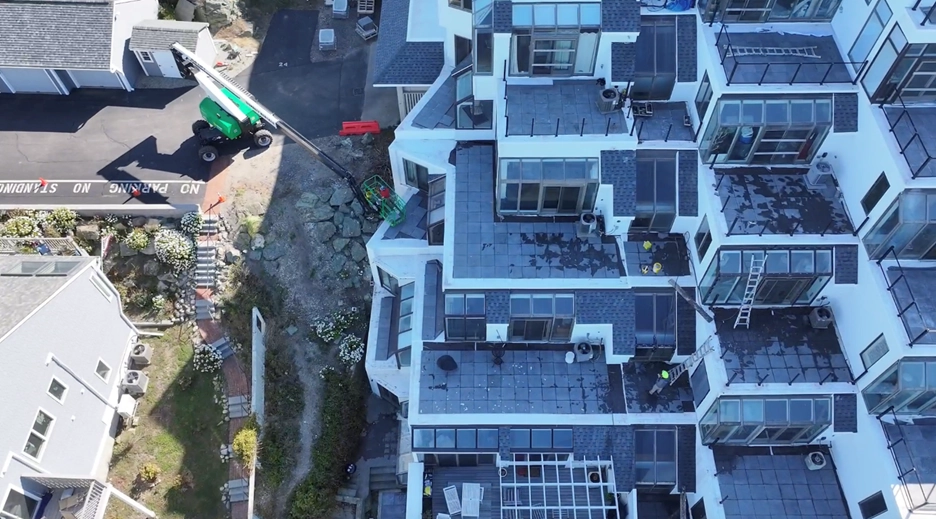
Atlantic Hill Hull, MA
Why Exterior Maintenance Matters in Due Diligence
During acquisition, refinancing, or capital planning, third-party inspectors conduct detailed Property Condition Assessments (PCAs). These evaluations focus heavily on:
- Masonry integrity (cracking, displacement, deterioration)
- Waterproofing performance (leaks, moisture intrusion, drainage issues)
- Facade safety and compliance
- Structural movement or settlement
- Neglected exterior conditions often result in:
- Deferred maintenance costs flagged in reports
- Reduced property valuation
- Escrow holdbacks or deal renegotiations
- Increased insurance scrutiny
Bottom line: Poor exterior maintenance can directly impact your deal.
Key Exterior Issues That Trigger Red Flags
1. Water Intrusion & Moisture Damage
Water is the #1 enemy of commercial structures in New England’s freeze-thaw climate.
Common issues include:
- Failed sealants and flashing
- Foundation leaks
- Efflorescence and interior moisture staining
These signal larger systemic waterproofing failures that raise immediate concern during due diligence.
2. Masonry Deterioration
Brick, stone, and concrete facades naturally degrade over time—but when left unaddressed, they become liabilities.
Typical findings:
- Cracked or spalling brick
- Deteriorated mortar joints
- Bulging or displaced facade sections
These issues not only affect aesthetics but can indicate structural risk.
3. Deferred Maintenance
Inspectors quickly identify when routine maintenance has been ignored.
Examples include:
- Missing repointing cycles
- Unaddressed facade cracks
- Aging waterproofing systems beyond lifecycle
Deferred maintenance often leads to large capital expenditure projections, which can derail deals.
Massachusetts & New England Code Considerations
Exterior maintenance isn’t just about appearance—it’s about compliance.
Massachusetts State Building Code (780 CMR)
- Requires structures to be maintained in a safe and weather-tight condition
- Emphasizes structural integrity of exterior walls and load-bearing elements
521 CMR (Architectural Access Board)
- Impacts exterior access points, including walkways and entry conditions affected by drainage and settlement
Local Façade Inspection Ordinances (Boston & Surrounding Areas)
- Periodic facade inspections may be required for certain building heights
- Unsafe conditions must be repaired immediately
IEBC (International Existing Building Code) – Adopted in MA
- Governs repairs, alterations, and maintenance of existing structures
- Requires proper methods when restoring masonry or waterproofing systems
Non-compliance can result in:
- Fines or violations
- Delays in financing or sale
- Mandatory emergency repairs
How Proactive Maintenance Improves Due Diligence Outcomes
Smart property owners take a proactive approach before inspections ever occur.
- Reduces Negotiation Leverage Against You
Clean inspection reports mean fewer buyer concessions and stronger deal positioning. - Improves Asset Value
Well-maintained exteriors signal strong asset management, increasing investor confidence. - Minimizes Capital Expenditure Surprises
Addressing issues early prevents inflated repair estimates during third-party reviews. - Enhances Tenant Retention
Dry, structurally sound buildings reduce complaints and improve tenant satisfaction.
What ESI Recommends Before a Due Diligence Inspection
At ESI Waterproofing & Masonry Restoration Inc., we advise commercial clients to complete a pre-inspection exterior assessment, including:
- Full facade evaluation
- Masonry condition survey
- Leak detection and waterproofing analysis
- Sealant and joint inspection
- Structural crack assessment
From there, we implement targeted repairs such as:
- Tuckpointing and repointing
- Crack repair and stabilization
- Foundation and below-grade waterproofing
- Sealant replacement and expansion joint repair
- Facade restoration and reinforcement
Why Choose ESI Waterproofing & Masonry Restoration Inc.
Serving commercial properties across Massachusetts and New England, ESI brings:
- Decades of hands-on masonry and waterproofing expertise
- Deep understanding of regional climate challenges
- Code-compliant repair solutions
- Minimal disruption to tenants and operations
We don’t just fix problems—we help position your property for stronger financial performance and smoother transactions.
Final Thoughts: Exterior Maintenance Is a Financial Strategy
In today’s market, exterior maintenance is no longer optional—it’s a core component of commercial property due diligence.
Ignoring masonry and waterproofing issues doesn’t just lead to repairs—it impacts:
- Property valuation
- Deal timelines
- Liability exposure
Proactive maintenance ensures your building stands up to scrutiny—and protects your investment.
Preparing for a property inspection, refinance, or sale?
Schedule a commercial exterior assessment with ESI Waterproofing & Masonry Restoration Inc. today.
Or contact our team to identify and resolve issues before they impact your bottom line.