
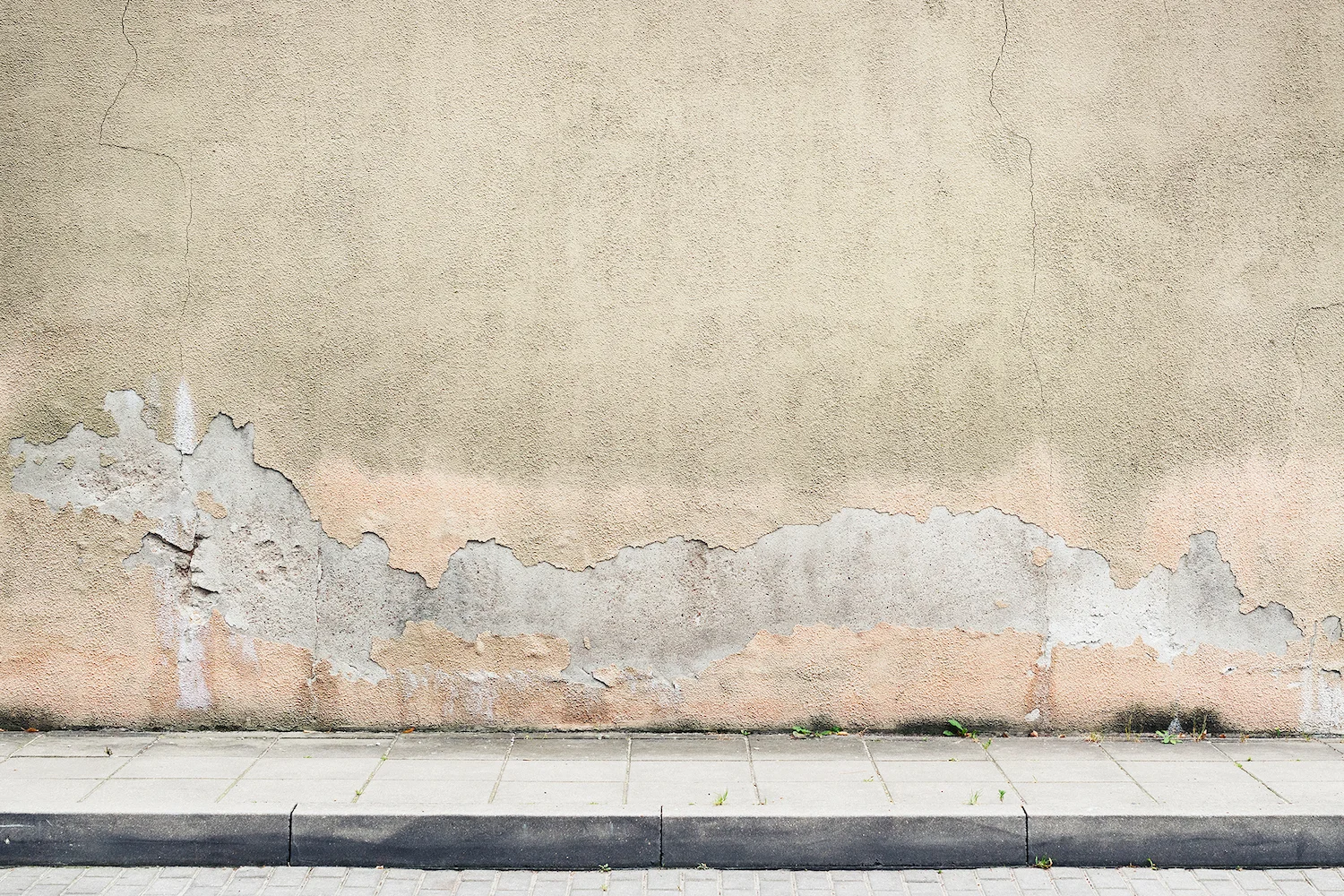
Stucco delamination is more than a cosmetic problem. When stucco separates, debonds, or begins pulling away from the underlying wall assembly, it can indicate moisture intrusion, improper installation, corrosion, substrate deterioration, or broader building-envelope problems.
For commercial property managers, facility directors, condominium associations, and building owners throughout Massachusetts and New England, identifying stucco delamination early can help prevent significantly more expensive repairs.
New England buildings face particularly demanding exterior conditions. Freeze-thaw cycles, wind-driven rain, snow, ice, humidity, coastal exposure, temperature fluctuations, and aging construction materials can all contribute to the deterioration of stucco and EIFS assemblies.
At ESI Waterproofing & Masonry Restoration, Inc., we specialize in diagnosing and repairing exterior building-envelope problems, including stucco repair, EIFS repair, masonry restoration, concrete restoration, waterproofing, historic restoration, and siding replacement.
If stucco is cracking, bulging, separating, or sounding hollow, the visible damage may only be the beginning.
What Is Stucco Delamination?
Stucco delamination occurs when the stucco finish or one of its underlying layers loses proper adhesion to the substrate or separates from adjacent layers of the wall assembly.
Depending on the construction system, the problem may involve:
- The stucco finish coat
- Base coat
- Reinforcing mesh
- Lath
- Sheathing
- Water-resistive barrier
- Flashing
- Sealants
- Substrate
- Framing or structural components
Delamination can sometimes be detected by hollow-sounding areas, cracking, bulging, blistering, staining, or sections of stucco that appear to be pulling away from the wall.
However, the visible stucco failure does not necessarily identify the source of the problem.
The underlying cause must be determined before repairs are performed.
7 Common Causes of Stucco Delamination
1. Water Intrusion Behind the Stucco
One of the most common contributors to stucco and EIFS deterioration is moisture intrusion.
Water can enter an exterior wall through:
- Cracked stucco
- Failed sealants
- Deteriorated flashing
- Window and door openings
- Roof-to-wall transitions
- Copings and parapets
- Penetrations
- Control joints
- Poorly sealed transitions between different materials
- Damaged waterproofing systems
Once moisture gets behind the exterior finish, it may become trapped within the wall assembly.
Over time, repeated wetting and drying can weaken materials, promote deterioration, and contribute to loss of adhesion.
For commercial buildings, this can create a much larger building-envelope problem than the original stucco defect suggests.
This is particularly important when evaluating stucco assemblies because repairing the visible surface without addressing water management can allow the underlying problem to continue.
2. Improper Stucco Installation
Stucco is a multi-layer exterior system, and its performance depends heavily on proper installation.
Problems during construction can include:
- Improper substrate preparation
- Incorrect material proportions
- Inadequate curing
- Improper attachment of lath
- Insufficient reinforcement
- Incorrect thickness
- Poor detailing around openings
- Improper flashing
- Inadequate drainage
- Incorrect installation of control joints
- Poor transitions between materials
An improperly installed stucco assembly may begin showing problems years after construction.
For property managers and building owners, this can make determining the original cause particularly difficult.
A professional investigation should therefore consider both the current condition of the stucco and the original construction details.
3. Freeze-Thaw Cycles
New England’s climate is particularly challenging for exterior building materials.
When water enters cracks, porous materials, or areas behind stucco and temperatures drop below freezing, that moisture can freeze and expand.
When temperatures rise, the ice melts.
This process can repeat dozens of times throughout a winter season.
Repeated freeze-thaw cycling can contribute to:
- Cracking
- Debonding
- Spalling
- Expansion
- Loss of adhesion
- Substrate deterioration
- Increased water penetration
The problem can become especially severe when moisture has already entered a compromised wall assembly.
For buildings in Boston, Cambridge, Quincy, Worcester, Newton, Brookline, Waltham, and other Massachusetts communities, freeze-thaw exposure should be considered when evaluating recurring stucco deterioration.
4. Failed Flashing and Drainage Details
Stucco does not exist independently from the rest of the building envelope.
Its performance depends on how it interacts with windows, doors, roofs, balconies, parapets, masonry, concrete, and other exterior components.
If flashing is missing, damaged, improperly installed, or no longer functioning correctly, water may be directed into the wall instead of away from it.
For an older commercial building, however, simply replacing a damaged piece of stucco may not solve the problem.
The surrounding building-envelope details should also be evaluated.
5. Deteriorated Substrate
Stucco needs a stable substrate.
If the underlying material has deteriorated, the stucco may eventually lose its ability to remain properly bonded.
Potential substrate problems include:
- Rot
- Corrosion
- Deteriorated sheathing
- Damaged framing
- Masonry deterioration
- Concrete deterioration
- Corroded metal components
- Water-damaged materials
In some cases, the stucco is essentially the symptom rather than the cause.
That is why simply patching cracks or applying another coating can provide only a temporary solution.
A proper assessment should determine whether the substrate beneath the stucco remains sound.
6. Failed Sealants and Expansion Joints
Commercial buildings contain numerous transitions where different materials meet.
These may include:
- Stucco-to-window transitions
- Stucco-to-masonry transitions
- Stucco-to-metal transitions
- Roof-to-wall transitions
- Control joints
- Expansion joints
- Penetrations
- Door openings
Sealants naturally deteriorate over time due to ultraviolet exposure, temperature changes, building movement, and weather.
When joints and sealants fail, water can enter behind the stucco assembly.
This is one reason sealant replacement and building-envelope maintenance should be incorporated into long-term commercial property maintenance programs.
7. Building Movement and Structural Issues
Buildings move.
Thermal expansion and contraction, settlement, vibration, structural movement, and movement between different building materials can place stress on stucco assemblies.
When movement exceeds the ability of the system to accommodate it, cracking or separation can occur.
Warning signs may include:
- Repeated cracking in the same location
- Stair-step or diagonal cracks
- Cracks around openings
- Cracks at material transitions
- Bulging areas
- Separation near control joints
- Recurring repairs in the same location
If stucco repeatedly fails after being repaired, the problem should be investigated rather than simply patched again.
Signs Your Commercial Building May Have Stucco Delamination
Visible Cracking
Cracks may allow water to enter the exterior wall system and should not automatically be treated as a cosmetic issue.
Bulging or Bowing
Stucco that appears swollen or detached from the wall may indicate a loss of adhesion or deterioration behind the finish.
Hollow-Sounding Areas
When inspected appropriately, delaminated areas can sometimes produce a hollow sound compared with firmly bonded sections.
Staining or Discoloration
Water staining can indicate moisture movement behind or through the exterior assembly.
Efflorescence
White crystalline deposits can indicate moisture movement through masonry or cementitious materials.
Rust Staining
Rust-colored staining may indicate corrosion of metal components within the wall assembly.
Recurring Cracks
If the same cracks repeatedly reopen after repairs, the underlying movement or moisture problem may not have been addressed.
Why New England Buildings Are Particularly Vulnerable
Massachusetts and the broader New England region expose commercial buildings to a combination of environmental stresses.
These include:
- Freeze-thaw cycles
- Heavy snow
- Ice
- Wind-driven rain
- Coastal moisture
- Temperature fluctuations
- Humidity
- UV exposure
- Road-salt exposure
- Aging building materials
Older buildings can be particularly challenging because previous repairs may have introduced incompatible materials or concealed deterioration.
This is especially important for historic Boston-area properties, where maintaining architectural character while addressing modern moisture-management requirements can require specialized restoration expertise.
Why Patching Stucco Alone May Not Be Enough
A common mistake in commercial building maintenance is treating stucco deterioration as a surface-level problem.
For example:
Crack → patch crack → repaint → problem returns.
If moisture is entering through a failed window sealant, damaged flashing, deteriorated substrate, or another building-envelope component, repairing only the visible crack does not eliminate the source.
A more effective approach is:
Inspect → identify cause → repair underlying issue → restore stucco → waterproof/protect → monitor.
This approach can help property owners avoid repeatedly paying for the same repair.
ESI’s Approach to Stucco and EIFS Repair
At ESI Waterproofing & Masonry Restoration, Inc., stucco repair is approached as part of the building envelope rather than simply a cosmetic repair.
ESI provides commercial and institutional restoration services throughout Massachusetts and New England, including stucco and EIFS repair, masonry restoration, concrete restoration, waterproofing, historic restoration, and exterior building-envelope repairs.
The company works with property managers, facility managers, commercial owners, developers, municipalities, general contractors, and institutional operators on complex restoration projects.
Depending on the condition of the building, an assessment may involve identifying:
- The extent of delamination
- Moisture intrusion
- Failed sealants
- Deteriorated substrate
- Damaged flashing
- Cracking patterns
- Material transitions
- Waterproofing deficiencies
- Areas requiring stucco removal and replacement
ESI also has experience performing extensive stucco repairs, including projects involving replacement of expansion-joint and window-perimeter sealants and removal and replacement of delaminated stucco.
When Should Property Managers Schedule a Stucco Inspection?
Do not wait until pieces of stucco begin falling from the building.
Consider scheduling an assessment when you notice:
- New or expanding cracks
- Bulging walls
- Loose stucco
- Water staining
- Interior moisture near exterior walls
- Failed caulking
- Deteriorated expansion joints
- Repeated stucco repairs
- Rust staining
- Damaged flashing
- Visible separation around windows and doors
A proactive inspection can help identify problems before they develop into more extensive masonry, concrete, structural, or waterproofing repairs.
Protect Your Commercial Property Before Stucco Problems Become Building-Envelope Problems
Stucco delamination is often a warning sign that something deeper may be occurring within the exterior wall assembly.
For Massachusetts and New England commercial properties, addressing moisture intrusion, failed sealants, inadequate drainage, deteriorated substrates, and other contributing factors is critical to achieving a durable repair.
ESI Waterproofing & Masonry Restoration, Inc. provides specialized stucco repair, EIFS repair, masonry restoration, concrete restoration, commercial waterproofing, historic restoration, and building-envelope services for commercial and institutional properties throughout Massachusetts and New England.
If your building has cracked, bulging, deteriorated, or delaminated stucco, don’t assume the solution is simply another patch.
Find the cause. Repair the source. Protect the building.
Request a Free Inspection & Estimate
Contact ESI Waterproofing & Masonry Restoration, Inc. to discuss your building’s stucco, EIFS, masonry, concrete, or waterproofing concerns.