
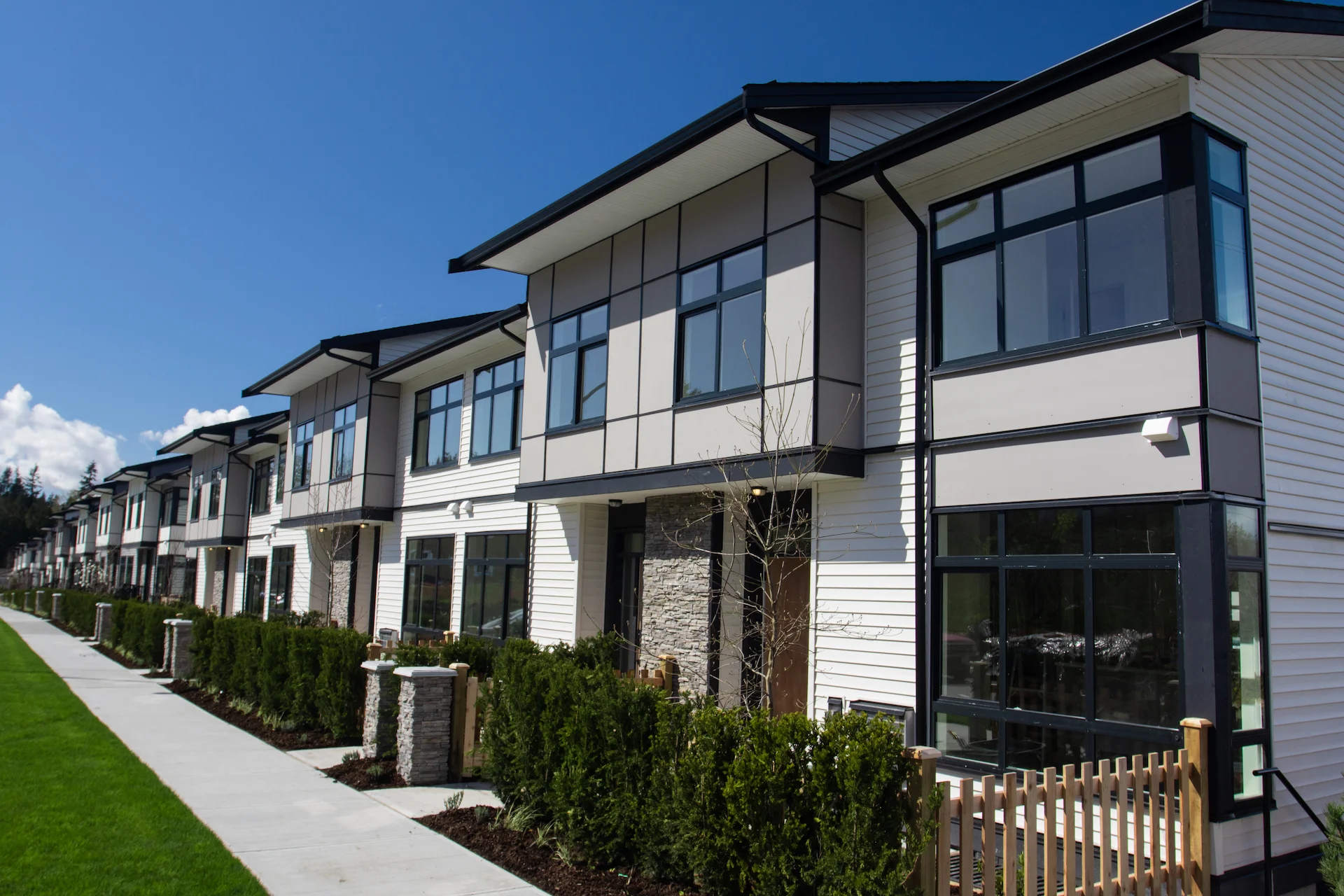
Traditional wood clapboard siding has helped define the architectural character of New England for generations. From historic commercial buildings in Boston to coastal properties in Rhode Island and institutional facilities throughout Connecticut and New Hampshire, clapboard remains a popular choice for its timeless appearance.
However, traditional wood siding can require significant maintenance. Moisture intrusion, wood rot, peeling paint, insect damage, and seasonal expansion and contraction can create ongoing challenges for property managers and commercial building owners.
Modern composite and PVC siding alternatives offer another option. Designed to replicate the appearance of traditional clapboard while providing different performance and maintenance characteristics, these materials may be well suited for commercial siding replacement projects when properly selected and installed.
At ESI Waterproofing & Masonry Restoration Inc., we specialize in commercial masonry restoration, concrete restoration, waterproofing, historical restoration, EIFS repair, stucco repair, PVC siding replacement, and clapboard siding replacement. Our experience with building-envelope systems allows us to approach siding projects with a focus on long-term durability, moisture management, and the protection of commercial properties.
Why Are Property Owners Considering Alternatives to Traditional Clapboard?
Traditional wood siding can provide excellent architectural character when properly maintained. However, New England’s demanding climate can accelerate exterior deterioration.
Commercial buildings throughout Massachusetts, Rhode Island, Connecticut, and New Hampshire experience exposure to:
- Heavy rain and wind-driven precipitation
- Snow, ice, and winter storms
- Freeze-thaw cycles
- Seasonal humidity changes
- Coastal moisture and salt-laden air
- Ultraviolet exposure and temperature fluctuations
When water penetrates behind deteriorated siding, it may affect sheathing, framing, insulation, and interior finishes. Failed coatings and damaged trim can also create pathways for additional moisture intrusion.
For property managers and facility directors, recurring siding repairs can increase maintenance costs, disrupt occupants, and complicate capital planning.
Modern composite and PVC siding alternatives may help address some of these concerns by offering lower-maintenance exterior finishes and, depending on the product, improved resistance to moisture-related deterioration.
Important: No siding material is completely waterproof on its own. The performance of any cladding system depends on proper design, flashing, drainage, installation, and maintenance.
1. Improved Resistance to Moisture-Related Deterioration
One of the most important advantages of many PVC and composite siding products is their resistance to certain forms of moisture-related damage.
Traditional wood clapboard can absorb water when coatings fail or when joints, edges, and penetrations are improperly detailed. Persistent moisture exposure may contribute to swelling, rot, splitting, and premature coating failure.
Many modern PVC siding products are manufactured to resist water absorption and do not experience wood rot in the same way as traditional lumber. Composite siding products vary by formulation, but many are designed to offer improved durability in demanding exterior environments.
For commercial properties, potential benefits include:
- Reduced risk of wood-rot-related siding deterioration
- Less frequent replacement of damaged boards
- Improved durability in wet or humid conditions
- Greater consistency in exterior appearance
- Potentially lower maintenance demands over the service life of the product
However, siding alone cannot correct an existing water-infiltration problem. Before replacement, property owners should investigate failed flashing, deteriorated sheathing, damaged masonry, defective sealants, and other building-envelope deficiencies.
At ESI Waterproofing & Masonry Restoration Inc., our waterproofing and restoration experience helps us evaluate the conditions behind deteriorated siding and identify repairs that may be needed before a new cladding system is installed.
2. Reduced Painting and Maintenance Requirements
Traditional wood clapboard typically requires periodic painting, staining, or other protective coatings. The frequency depends on exposure, substrate condition, product quality, preparation, and maintenance practices.
For commercial buildings, repainting can involve:
- Labor-intensive surface preparation
- Lift or scaffold access
- Tenant and occupant coordination
- Temporary disruption to building operations
- Recurring material and labor expenses
Many PVC siding products are available with durable factory finishes and do not require routine painting in the same way as traditional wood siding. Composite products may also offer factory-applied finishes designed to reduce maintenance requirements.
The result can be a more predictable exterior maintenance plan.
Property managers should still review manufacturer requirements for cleaning, color retention, impact damage, caulking, trim, and repairs. Lower maintenance does not mean maintenance-free.
When developing a capital improvement plan, ESI can help commercial owners evaluate whether PVC siding replacement, composite cladding, targeted clapboard repair, or a broader exterior restoration is the most appropriate approach.
3. Traditional Architectural Appearance with Modern Material Options
New England commercial properties often need to balance modern performance with established architectural character.
Composite and PVC clapboard alternatives are available in profiles, textures, colors, and dimensions intended to resemble traditional wood siding. Depending on the manufacturer and product, these materials may be used to achieve:
- Traditional horizontal clapboard profiles
- Historic-style trim and corner details
- Consistent board spacing and reveal
- A coordinated exterior color scheme
- A refreshed appearance for aging commercial properties
For newer office buildings, multifamily properties, retail facilities, and institutional buildings, modern siding can provide a clean, consistent exterior appearance.
For historic properties, material selection requires additional care. A replacement product should be evaluated for its profile, texture, scale, installation details, and compatibility with the building’s preservation requirements.
ESI Waterproofing & Masonry Restoration Inc. understands that historical restoration is not simply a matter of replacing old materials with new ones. The appropriate solution must consider the building’s architectural significance, existing construction, moisture performance, and applicable approvals.
4. Potential Long-Term Value for Commercial Property Owners
Commercial siding replacement is a capital investment. Property owners should consider more than the initial installation price.
A lifecycle-based evaluation may include:
- Initial material and installation costs
- Surface preparation and substrate repairs
- Flashing and waterproofing improvements
- Cleaning and maintenance requirements
- Expected durability under local weather conditions
- Future repair and replacement needs
- Access equipment and occupant disruption
- Compatibility with existing exterior assemblies
Although composite or PVC siding may have a higher initial cost than some traditional siding options, the total value may be favorable when reduced maintenance and longer-lasting performance are considered.
Actual costs and service life depend on the product, building conditions, exposure, workmanship, and maintenance. Property managers should request a project-specific evaluation rather than relying on general product claims.
ESI can help identify the scope of restoration and siding work needed to support a practical, long-term property maintenance strategy.
5. Better Planning for New England’s Harsh Weather Conditions
New England’s seasonal weather makes exterior building performance especially important.
In Massachusetts, Rhode Island, Connecticut, and New Hampshire, siding systems must be appropriately detailed for local exposure, including rain, snow, ice, wind, and temperature changes.
Potential benefits of modern siding alternatives include:
Resistance to Certain Forms of Moisture Damage
PVC and some composite materials can reduce susceptibility to wood-specific problems such as rot and swelling. The underlying wall assembly still requires effective water management.
Consistent Dimensional Performance
Many engineered siding products are designed for predictable performance under normal temperature and moisture conditions. Installation must account for the manufacturer’s requirements for movement, clearances, fastening, and joints.
Easier Replacement of Damaged Sections
Depending on the product and installation method, individual boards, trim components, or sections may be replaceable without rebuilding the entire exterior. Product availability and matching should be considered.
Compatibility with Broader Restoration Work
Siding replacement may be coordinated with masonry repairs, window and door transitions, sealant replacement, waterproofing, and other building-envelope improvements.
A properly planned project can address more than the visible siding. It can help improve the overall performance and appearance of the exterior wall system.
6. Massachusetts and New England Building Code Considerations
Siding replacement on a commercial property must be evaluated in the context of applicable building codes, local amendments, project scope, and the existing building’s construction.
Massachusetts State Building Code — 780 CMR
Massachusetts’ Tenth Edition of the State Building Code is based on modified 2021 International Codes and includes provisions relevant to commercial exterior walls, wall coverings, fire safety, structural design, and energy efficiency.
The code framework includes requirements that may affect siding replacement, such as:
- Exterior wall construction and weather protection
- Approved materials and installation methods
- Structural attachment and wind-resistance considerations
- Fire performance and required clearances
- Moisture management and flashing
- Energy-efficiency requirements when applicable
The Massachusetts exterior-wall provisions reference requirements for certain siding materials, including vinyl siding and fiber-cement siding. The specific requirements applicable to composite and PVC products depend on the material, assembly, product documentation, and project conditions.
Relevant resources include the Massachusetts State Building Code, 780 CMR Tenth Edition, including Chapter 14, Exterior Walls, and applicable provisions governing exterior wall coverings.
What Property Managers Should Verify Before Replacement
Before authorizing commercial siding replacement, stakeholders should coordinate with the design professional, contractor, and local building official to determine:
- Whether the project qualifies as repair, alteration, or new construction under the applicable code.
- Whether the proposed siding and wall assembly meet applicable product, structural, fire, and weather-protection requirements.
- Whether existing sheathing, insulation, flashing, and weather-resistant barriers need repair or replacement.
- Whether the project triggers energy-code or other alteration requirements.
- Whether local historic-district, preservation, or planning approvals are required.
Rhode Island, Connecticut, and New Hampshire have their own building-code requirements and local administrative processes. Applicable state and municipal requirements should be confirmed before construction begins.
Code note: Building codes and local amendments can change. This article is intended for general planning purposes and does not replace project-specific code review, architectural specifications, engineering, or approval from the applicable authority having jurisdiction.
7. Composite and PVC Siding Versus Traditional Wood Clapboard
The best siding material depends on the building’s design, budget, maintenance objectives, and preservation requirements.
| Consideration | Traditional Wood Clapboard | PVC and Composite Alternatives |
|---|---|---|
| Appearance | Authentic natural wood character | Can replicate traditional clapboard profiles |
| Moisture resistance | Requires effective coatings and detailing | Many products resist certain moisture-related forms of deterioration |
| Painting | Usually requires periodic coating maintenance | Many products offer factory finishes; requirements vary |
| Repairs | Damaged boards can be repaired or replaced | Product-specific repair and replacement procedures |
| Historic compatibility | Often preferred for authentic preservation | May be suitable for selected projects after review |
| Initial cost | Varies by species, profile, and labor | Varies by product, substrate repairs, and installation |
| Long-term maintenance | Depends heavily on exposure and upkeep | Depends on product quality, installation, and maintenance |
Neither material is universally superior. Traditional wood may be the right choice for a historically significant building where authenticity is essential. PVC or composite siding may be appropriate where reduced maintenance, consistent appearance, and modern material performance are priorities.
8. Why Professional Installation and Waterproofing Matter
Even high-quality siding can fail when it is installed over a deteriorated or improperly detailed wall assembly.
A successful siding replacement project should consider:
- Existing wall and substrate conditions
- Water-resistant barriers and drainage planes
- Flashing at windows, doors, roofs, and penetrations
- Sealants, joints, and transitions
- Fastener placement and manufacturer requirements
- Ventilation and drainage details where required
- Compatibility with adjacent masonry, concrete, EIFS, and stucco
- Proper detailing at corners, trim, and terminations
For commercial buildings, these details are essential to help minimize water intrusion and protect the structure behind the cladding.
At ESI Waterproofing & Masonry Restoration Inc., we combine siding replacement capabilities with expertise in masonry restoration, concrete restoration, waterproofing, EIFS repair, and stucco repair. This integrated perspective can be valuable when deteriorated siding is connected to broader building-envelope problems.
9. When Should a Commercial Property Consider Siding Replacement?
Property managers and commercial owners should consider an exterior assessment when they observe:
- Rotting, splitting, or deteriorated clapboard
- Recurring paint failure
- Visible gaps or damaged joints
- Water stains near windows or exterior walls
- Repeated tenant complaints about leaks
- Damaged trim or exterior penetrations
- Deteriorated sheathing discovered during repairs
- Increasing exterior maintenance costs
- An upcoming capital improvement or façade restoration project
A professional assessment can help determine whether the property needs isolated repairs, partial siding replacement, full PVC or composite clapboard replacement, or a broader restoration program.
Addressing the underlying cause of deterioration is critical. Replacing visible siding without correcting water-infiltration pathways may lead to recurring problems.
How ESI Waterproofing & Masonry Restoration Inc. Can Help
Selecting the right contractor is an important part of protecting a commercial property investment.
ESI Waterproofing & Masonry Restoration Inc. provides specialized restoration and exterior building services for property managers, facility directors, commercial owners, and other stakeholders throughout Massachusetts, Rhode Island, Connecticut, and New Hampshire.
Our services include:
- Commercial PVC siding replacement
- Clapboard siding replacement and restoration
- Masonry restoration and repair
- Concrete restoration
- Waterproofing systems and repairs
- Historical restoration
- EIFS repair
- Stucco repair
- Building-envelope restoration solutions
Whether your property requires a targeted siding repair, a full exterior cladding upgrade, or coordinated waterproofing and masonry restoration, ESI can help evaluate the project’s needs and develop a practical path forward.
Protect Your Commercial Property with the Right Siding Solution
Modern composite and PVC alternatives to traditional clapboard can offer commercial property owners opportunities to reduce maintenance demands, improve resistance to certain forms of deterioration, and maintain a traditional architectural appearance.
However, long-term performance depends on more than the siding material. Proper substrate preparation, flashing, moisture management, installation, and ongoing maintenance are essential to a successful exterior restoration project.
If your commercial property in Massachusetts, Rhode Island, Connecticut, or New Hampshire is experiencing siding deterioration, recurring water intrusion, or increasing exterior maintenance costs, ESI Waterproofing & Masonry Restoration Inc. can help you evaluate your options.
Contact ESI Waterproofing & Masonry Restoration Inc. to discuss your commercial siding replacement, waterproofing, or building-envelope restoration needs.
Avoid costly surprises. Protect your building. Control your capital expenses.
Contact ESI Waterproofing & Masonry Restoration Inc. to develop a preventive repair strategy tailored to your property.