
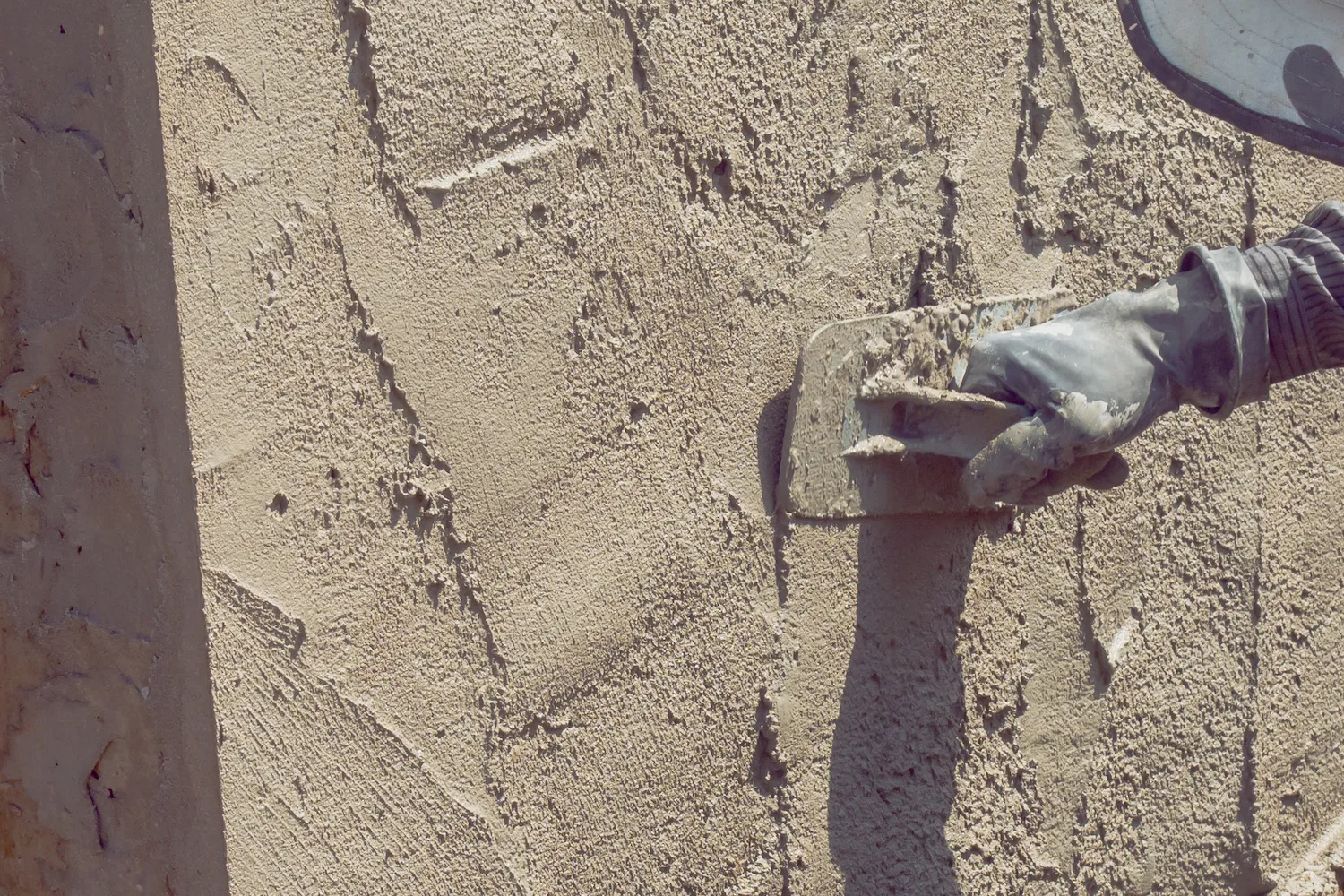
Winter in New England can be unforgiving on commercial building exteriors. Freezing temperatures, snow, ice, wind-driven rain, moisture intrusion, and repeated freeze-thaw cycles can expose weaknesses in stucco systems and turn minor exterior defects into expensive restoration projects.
For property managers, facility directors, and commercial building owners throughout Massachusetts, Rhode Island, Connecticut, and New Hampshire, preparing a stucco-clad building before winter is an important part of protecting the building envelope, preventing water intrusion, and extending the service life of the exterior.
Stucco can provide a durable and attractive exterior finish, but it depends on proper installation, drainage, flashing, sealants, substrate conditions, and ongoing maintenance. Cracks, failed sealants, deteriorated joints, damaged flashing, and moisture trapped behind the stucco can become significantly more problematic when temperatures drop.
A proactive commercial stucco inspection and winterization plan can help identify vulnerabilities before winter weather turns them into emergency repairs.
For commercial properties throughout New England, ESI Waterproofing & Masonry Restoration, Inc. provides professional stucco repair, EIFS repair, waterproofing, masonry restoration, concrete restoration, historical restoration, and PVC and clapboard siding replacement.
Visit ESI Waterproofing & Masonry Restoration, Inc.
Why Winter Weather Is Hard on Commercial Stucco
New England buildings experience some of the most challenging conditions for exterior wall systems.
Throughout Massachusetts, Rhode Island, Connecticut, and New Hampshire, commercial buildings can be exposed to:
- Freezing and below-freezing temperatures
- Rapid freeze-thaw cycles
- Wind-driven rain
- Heavy snowfall
- Ice accumulation
- Snowmelt
- High winds
- Seasonal humidity changes
- Water infiltration
- Expansion and contraction of building materials
- Deicing chemicals and splash back near lower wall areas
The biggest concern isn’t necessarily the cold itself. Moisture combined with freezing temperatures can create serious problems for stucco and the underlying wall assembly.
Water that enters through cracks, failed joints, deteriorated sealants, or improperly functioning flashing can become trapped within an exterior wall assembly. When temperatures fall below freezing, that moisture can freeze and expand, potentially contributing to cracking, delamination, deterioration, and damage to underlying materials.
That is why commercial property managers should address exterior stucco deficiencies before the winter season begins—not after the first major freeze.
10 Winter Preparation Tips for Commercial Stucco Buildings
1. Schedule a Professional Stucco Exterior Inspection
One of the most important steps before winter is having the building exterior evaluated for visible signs of deterioration.
A professional inspection should look for:
- Stucco cracks
- Hairline cracking and larger fractures
- Bulging or displaced areas
- Delamination
- Soft or deteriorated sections
- Staining
- Efflorescence
- Failed sealants
- Deteriorated expansion or control joints
- Damaged flashing
- Improper drainage
- Open penetrations
- Gaps around windows and doors
- Deterioration at roof-to-wall transitions
- Damage around mechanical penetrations
- Signs of moisture intrusion
- Deterioration at parapets and wall transitions
For commercial buildings, an exterior inspection can also help property managers distinguish between cosmetic stucco damage and potential building-envelope problems.
That distinction is important because simply patching visible cracks may not address the source of the moisture problem.
2. Repair Stucco Cracks Before Freezing Temperatures Arrive
Cracks in stucco should not automatically be dismissed as cosmetic.
Small cracks can create pathways for water to reach areas behind the exterior finish. Once moisture enters the wall assembly, repeated freezing and thawing can make an existing problem progressively worse.
Property managers should pay particular attention to:
- Horizontal cracks
- Vertical cracks
- Stair-step cracks
- Cracks around windows and doors
- Cracks at building corners
- Cracks near rooflines
- Cracks around penetrations
- Cracks associated with control joints
- Areas where cracking appears alongside staining or bulging
The appropriate repair method depends on the type, size, location, and cause of the damage.
A stucco repair should address the underlying building-envelope condition whenever possible—not simply conceal the visible crack.
3. Inspect and Replace Failed Sealants
Sealants are an important part of the commercial building envelope.
Stucco often interfaces with materials that move differently as temperatures change, including:
- Windows
- Doors
- Masonry
- Concrete
- Metal
- Roofing materials
- Expansion joints
- Mechanical equipment
- PVC and other siding materials
Over time, sealants can shrink, crack, harden, separate from adjoining surfaces, or lose their ability to accommodate movement.
Before winter, inspect sealant joints for:
- Cracking
- Shrinkage
- Adhesion failure
- Gaps
- Brittleness
- Separation
- Deterioration
- Improper installation
Failed sealants should be evaluated and repaired using an appropriate system for the specific building materials and joint conditions.
4. Check Flashing Around Windows, Doors, and Roof Transitions
Flashing is one of the most important components of a water-resistant exterior wall assembly.
Water can enter commercial buildings at transitions between different exterior systems if flashing is missing, damaged, improperly installed, or no longer functioning correctly.
Pay particular attention to:
- Window heads and sills
- Door openings
- Roof-to-wall transitions
- Parapets
- Copings
- Balconies
- Wall penetrations
- Mechanical penetrations
- Exterior trim
- Areas where stucco meets masonry or concrete
Massachusetts’ building code requirements recognize the importance of a weather-resistant exterior wall envelope and provisions for flashing, water-resistive barriers, and drainage behind exterior wall coverings.
For property managers, the takeaway is simple:
A stucco wall should not be evaluated as an isolated finish. The entire exterior wall assembly should be considered when investigating water intrusion.
5. Check for Moisture Intrusion and Hidden Damage
Visible stucco deterioration may be only the surface indication of a larger problem.
Potential warning signs include:
- Interior staining
- Damp odors
- Discolored stucco
- Efflorescence
- Repeated paint failure
- Bubbling or blistering finishes
- Soft wall areas
- Mold-like growth
- Deteriorated sheathing
- Rotting framing
- Persistent moisture near windows
- Damage that repeatedly returns after repairs
If a commercial building has experienced repeated leaks, repairing the visible stucco without identifying the source of the moisture may result in recurring problems.
The goal should be to identify where water is entering, how it is moving through the assembly, and what repairs are necessary to restore the building envelope.
6. Inspect Stucco Around Windows and Doors
Window and door openings are particularly important areas to inspect before winter.
These locations involve multiple building materials and joints, creating potential pathways for water infiltration.
Look for:
- Cracked stucco
- Failed sealants
- Gaps
- Damaged flashing
- Staining below windows
- Deteriorated sills
- Separation between stucco and frames
- Improper drainage
- Evidence of recurring leaks
If occupants or tenants have reported water intrusion around windows, don’t wait until winter weather intensifies.
Water infiltration around a commercial window can affect both the exterior wall and interior finishes.
7. Inspect Parapets, Copings, and Roof-to-Wall Transitions
Commercial stucco buildings frequently have complex roof and wall intersections.
Parapets and roof-to-wall transitions deserve special attention because they are exposed to rain, snow, ice, wind, and repeated temperature changes.
Before winter, inspect:
- Parapet caps
- Copings
- Flashing
- Counterflashing
- Stucco transitions
- Sealants
- Roof-to-wall intersections
- Drainage points
- Masonry joints
- Areas around rooftop equipment
A failure at a roof-to-wall transition can allow water to enter areas that are difficult to see from the ground.
8. Keep Gutters, Downspouts, and Drainage Systems Clear
A properly maintained drainage system is an important part of protecting a stucco exterior.
Clogged or damaged gutters and downspouts can allow water to overflow directly onto stucco walls.
Before winter, property managers should inspect:
- Gutters
- Downspouts
- Leaders
- Scuppers
- Roof drains
- Splash blocks
- Drainage outlets
- Areas where downspouts discharge
Water should be directed away from the building rather than allowed to repeatedly saturate the exterior wall.
Poor drainage can turn an otherwise manageable stucco issue into a recurring moisture problem.
9. Inspect Lower Stucco Areas for Splashback and Deicing Damage
The lower portion of a commercial building can experience particularly harsh conditions during winter.
Snow, slush, road spray, and deicing chemicals can repeatedly expose the lower exterior wall to moisture.
Inspect areas near:
- Parking lots
- Sidewalks
- Building entrances
- Loading docks
- Driveways
- Snow storage areas
- Dumpster pads
- Salt application areas
Property managers should also monitor where snow is routinely piled against exterior walls.
Snow stored against stucco can prolong moisture exposure and increase the potential for freeze-thaw deterioration.
10. Address Problems Before Winter Emergency Conditions
One of the biggest advantages of proactive exterior maintenance is avoiding emergency repairs during the worst weather of the year.
A small crack or failed sealant joint may be relatively straightforward to address during favorable conditions.
A larger building-envelope failure discovered during a winter storm can become much more complicated.
Emergency conditions may involve:
- Interior water damage
- Tenant complaints
- Damaged finishes
- Business interruption
- Unsafe exterior conditions
- Emergency access requirements
- Temporary weather protection
- Unplanned restoration expenses
For property managers responsible for multiple commercial properties, fall exterior inspections can help identify repairs that should be completed before winter and larger capital projects that should be budgeted for the following construction season.
What Happens When Stucco Problems Are Ignored During Winter?
Ignoring deteriorated stucco doesn’t necessarily mean a building will immediately experience catastrophic damage.
The concern is that water intrusion and freeze-thaw exposure can progressively increase the severity and cost of the repair.
A potential progression could look like:
Crack → Water Entry → Moisture Accumulation → Freeze-Thaw Expansion → Stucco Deterioration → Substrate Damage → Larger Restoration Project
The actual progression depends on the wall assembly, moisture exposure, climate, construction details, and severity of the defect.
This is why commercial property managers should focus on preventive building-envelope maintenance rather than reactive repairs.
Massachusetts and New England Building Code Considerations
Commercial exterior repairs should be evaluated with the applicable state and local building requirements in mind.
Massachusetts
Massachusetts currently operates under the 10th Edition of 780 CMR, which is based substantially on the 2021 International Building Code with Massachusetts amendments. The 10th Edition became effective in 2024, with the concurrency period ending June 30, 2025.
Massachusetts 780 CMR Chapter 14 addresses exterior walls and includes requirements related to weather protection. The code addresses the exterior wall envelope, flashing, water-resistive barriers, and drainage intended to prevent detrimental water accumulation within wall assemblies.
For commercial property owners, this reinforces the importance of treating stucco as part of a complete exterior wall envelope, rather than merely a decorative surface.
Rhode Island
Rhode Island’s current State Building Code incorporates the 2021 International Building Code with Rhode Island amendments, effective December 1, 2025. Rhode Island also adopted the 2021 International Existing Building Code for existing-building work.
This is particularly relevant for commercial restoration and renovation projects involving existing stucco and exterior wall assemblies.
Connecticut
Connecticut’s 2026 State Building Code adopts the 2024 International Building Code and 2024 International Existing Building Code, with Connecticut-specific amendments.
Property owners planning significant exterior restoration should confirm the applicable requirements with the appropriate design professional and local authority having jurisdiction.
New Hampshire
New Hampshire updated its state building code effective July 1, 2026, adopting the 2024 International Building Code and 2024 International Existing Building Code, along with other updated model codes and state amendments.
Important Code Disclaimer
Building-code requirements can vary based on the property’s location, occupancy, construction type, age, scope of work, applicable amendments, and local permitting requirements.
This article is provided for general informational and maintenance-planning purposes and is not a substitute for the applicable building code, architectural specifications, engineering evaluation, or direction from the local authority having jurisdiction (AHJ).
How ESI Waterproofing & Masonry Restoration, Inc. Can Help
Winter preparation is about more than applying a quick patch to visible stucco damage.
ESI Waterproofing & Masonry Restoration, Inc. provides commercial exterior restoration and building-envelope services designed to address the underlying conditions that can contribute to water intrusion and exterior deterioration.
ESI’s services include:
Stucco Repair
Damaged, cracked, deteriorated, or compromised stucco can be evaluated and repaired as part of a broader exterior restoration strategy.
EIFS Repair
ESI provides EIFS repair services for commercial buildings experiencing deterioration, cracking, water intrusion, or other exterior-envelope concerns.
Waterproofing
Waterproofing solutions can help address vulnerable areas of a commercial building envelope and reduce the potential for water intrusion.
Masonry Restoration
Masonry restoration can address deteriorated brick, mortar joints, concrete masonry, stone, and other exterior components that interact with stucco systems.
Concrete Restoration
Deteriorated concrete at balconies, entrances, façade components, structural elements, and other exterior areas can contribute to water-management problems and should be evaluated as part of the overall building envelope.
Historical Restoration
Historic and architecturally significant commercial properties often require specialized restoration strategies that respect the existing materials and appearance of the building.
PVC & Clapboard Siding Replacement
Where stucco or other exterior materials interface with siding systems, replacement or restoration may be necessary to maintain a durable exterior envelope.
New England Commercial Stucco Winterization Checklist
Before winter arrives, property managers and facility directors should consider the following checklist:
☐ Schedule a professional exterior inspection
☐ Identify cracks and deteriorated stucco
☐ Evaluate recurring water-intrusion areas
☐ Inspect window and door openings
☐ Check sealants and control joints
☐ Inspect flashing and roof-to-wall transitions
☐ Check parapets and copings
☐ Clean and inspect gutters and downspouts
☐ Verify proper drainage away from the building
☐ Inspect lower walls exposed to snow and road spray
☐ Look for staining, efflorescence, or other moisture indicators
☐ Document areas requiring immediate repair
☐ Develop a budget for larger restoration projects
☐ Complete priority waterproofing and stucco repairs before severe winter conditions
☐ Establish a spring follow-up inspection plan
Don’t Wait for Winter Water Intrusion to Become an Emergency
For commercial property owners and managers throughout Massachusetts and New England, fall is an ideal time to evaluate the condition of stucco and other exterior building-envelope components.
The objective isn’t simply to make a building look better before winter.
It’s to identify conditions that could allow water intrusion, freeze-thaw deterioration, and progressive exterior damage before they become more expensive problems.
If your commercial property has cracked stucco, recurring leaks, deteriorated sealants, damaged flashing, EIFS concerns, masonry deterioration, or other exterior-envelope issues, ESI Waterproofing & Masonry Restoration, Inc. can help evaluate the problem and develop an appropriate restoration strategy.
Protect your building before winter exposes its weaknesses.
Contact ESI Waterproofing & Masonry Restoration, Inc. to discuss commercial stucco repair, EIFS repair, waterproofing, masonry restoration, concrete restoration, historic restoration, or exterior siding replacement throughout Massachusetts, Rhode Island, Connecticut, and New Hampshire.
Disclaimer: This article is provided for general informational and educational purposes only and is not a substitute for a project-specific inspection, professional advice, or applicable building codes and regulations. Building conditions, materials, and requirements vary by property and jurisdiction. Recommendations should be evaluated by qualified professionals based on the specific project. External resources are provided for informational purposes only; their inclusion does not imply endorsement of ESI Waterproofing & Masonry Restoration Inc. by the referenced organizations.