
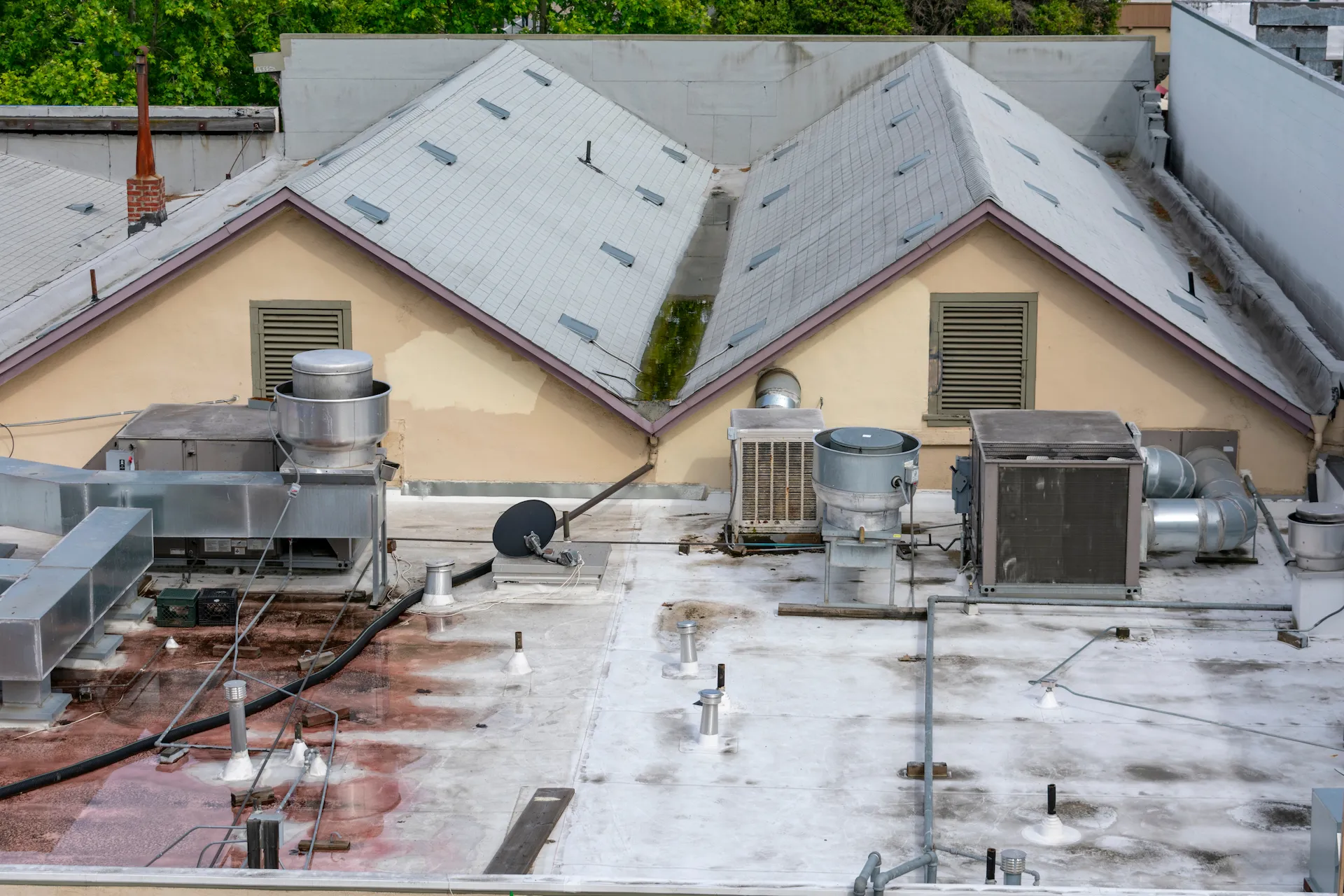
For commercial property managers and building owners across New England, rooftop HVAC systems are essential infrastructure. However, many property owners don’t realize that improperly installed, aging, or poorly maintained rooftop mechanical systems can become a major source of masonry leaks and building envelope deterioration.
At ESI Waterproofing & Masonry Restoration Inc., we frequently identify rooftop HVAC-related water intrusion issues during facade inspections and leak investigations throughout Massachusetts and the Northeast. What may appear as a window leak, interior staining, or masonry deterioration often originates from rooftop penetrations, drainage failures, or compromised flashing surrounding HVAC equipment.
Understanding this connection can help property owners avoid costly structural damage, tenant complaints, mold concerns, and emergency masonry repairs.
How Rooftop HVAC Systems Can Cause Masonry Leaks
Commercial rooftop HVAC systems introduce multiple penetration points into a building’s waterproofing system. Over time, exposure to harsh New England weather conditions—including freeze-thaw cycles, heavy snow loads, wind-driven rain, and thermal expansion—can compromise these vulnerable areas.
Common causes of HVAC-related masonry leaks include:
Failed Roof Flashing Around Mechanical Units
Flashing systems installed around rooftop curbs, ducts, and penetrations are designed to prevent water infiltration. When flashing deteriorates or separates, water can migrate beneath roofing membranes and into masonry wall systems.
Once moisture enters the building envelope, it often travels downward through concealed pathways before appearing as:
- Interior wall staining
- Efflorescence on brick or concrete
- Cracked masonry joints
- Deteriorating sealants
- Rust staining near steel supports
- Spalling brick or concrete surfaces
In many commercial buildings, the leak source is several feet—or even multiple floors—above the visible damage.
Improper HVAC Condensate Drainage
HVAC systems generate substantial condensate, especially during humid New England summers. If condensate lines clog, disconnect, or drain improperly onto masonry surfaces, chronic moisture exposure can occur.
Over time, constant saturation accelerates:
- Mortar joint deterioration
- Masonry cracking
- Surface delamination
- Freeze-thaw damage
- Mold and mildew growth
This is especially common on older commercial buildings where rooftop drainage systems were not originally designed for modern HVAC loads.
Rooftop Vibration and Structural Movement
Large rooftop mechanical systems create vibration and cyclical movement that can gradually impact roofing materials, sealants, and adjacent masonry assemblies.
Repeated movement may lead to:
- Expansion joint failure
- Separation between parapet walls and roofing systems
- Cracked coping stones
- Open mortar joints
- Failed sealant connections
Even small openings can allow significant water intrusion during New England storms.
Why This Problem Is Especially Common in New England
Commercial buildings throughout Massachusetts and the Northeast face aggressive environmental conditions that accelerate masonry and waterproofing failures.
Freeze-Thaw Cycles
Water absorbed into masonry expands when frozen, placing pressure on brick, stone, and concrete surfaces. Repeated freeze-thaw cycling causes cracking, spalling, and mortar deterioration.
Wind-Driven Coastal Rain
Buildings in Boston, coastal Massachusetts, Rhode Island, and throughout New England experience frequent wind-driven rain events that force water into vulnerable facade areas.
Aging Commercial Building Stock
Many New England commercial properties were constructed decades ago and have undergone multiple HVAC upgrades over time. Improperly integrated mechanical retrofits often create hidden waterproofing vulnerabilities.
Warning Signs of HVAC-Related Masonry Leaks
Commercial property managers should watch for these common indicators:
- Water stains near top-floor ceilings or walls
- Bubbling paint or interior plaster damage
- Efflorescence on masonry surfaces
- Loose or cracked brickwork near rooflines
- Deteriorated parapet walls
- Frequent roof leak complaints after storms
- Rust stains beneath rooftop equipment areas
- Recurring sealant failures around windows or facade joints
Addressing these issues early can significantly reduce long-term restoration costs.
How ESI Waterproofing & Masonry Restoration Inc. Helps
At ESI Waterproofing & Masonry Restoration Inc., we specialize in identifying and repairing complex building envelope failures for commercial and multi-unit properties across New England.
Our services include:
- Masonry leak investigations
- Commercial waterproofing systems
- Facade restoration
- Expansion joint replacement
- Sealant replacement
- Parapet wall repairs
- Roof-to-wall flashing integration
- Concrete restoration
- Preventative maintenance programs
Our team understands the unique environmental challenges facing commercial buildings in Massachusetts and throughout the Northeast.
By combining waterproofing expertise with masonry restoration knowledge, we help property owners resolve the root cause of water intrusion—not just the visible symptoms.
Preventative Maintenance Strategies for Commercial Buildings
To minimize HVAC-related masonry leaks, commercial property owners should implement proactive maintenance plans that include:
Annual Building Envelope Inspections
Routine inspections can identify deteriorated sealants, flashing failures, and masonry damage before major leaks develop.
Rooftop Equipment Reviews
Mechanical upgrades should always be evaluated alongside roofing and waterproofing systems to ensure proper integration.
Sealant and Expansion Joint Maintenance
Sealants are not permanent materials. Aging joints should be monitored and replaced before failure occurs.
Drainage System Evaluations
Proper roof drainage is critical for preventing ponding water and overflow conditions near masonry assemblies.
Protect Your Commercial Property Before Minor Leaks Become Major Structural Repairs
Water intrusion rarely resolves itself. Small leaks originating around rooftop HVAC systems can eventually lead to major facade deterioration, interior damage, and expensive restoration projects.
If your commercial property is experiencing recurring leaks, masonry deterioration, or facade moisture issues, the team at ESI Waterproofing & Masonry Restoration Inc. can help identify the source and develop long-term repair solutions tailored to New England buildings.
Contact ESI today to schedule a commercial facade assessment or waterproofing consultation.