
Exterior Insulation and Finish Systems (EIFS) can provide commercial buildings with an attractive, energy-efficient exterior while helping protect the building envelope from the demanding New England climate.
But like any exterior wall system, EIFS requires proper installation, maintenance, inspections, and timely repairs.
For property managers, facility directors, and commercial building owners throughout Massachusetts and New England, identifying EIFS problems early can help prevent a relatively manageable repair from developing into a much more expensive waterproofing, structural, or masonry restoration project.
The challenge is that EIFS damage is not always obvious.
Moisture can enter through failed sealants, penetrations, window and door interfaces, flashing deficiencies, cracks, or damaged areas of the finish system. In some cases, significant moisture intrusion may be occurring behind the exterior before obvious interior damage appears.
So, how do you know when your commercial EIFS system needs professional attention?
Here are 10 warning signs that property managers and building owners should not ignore.
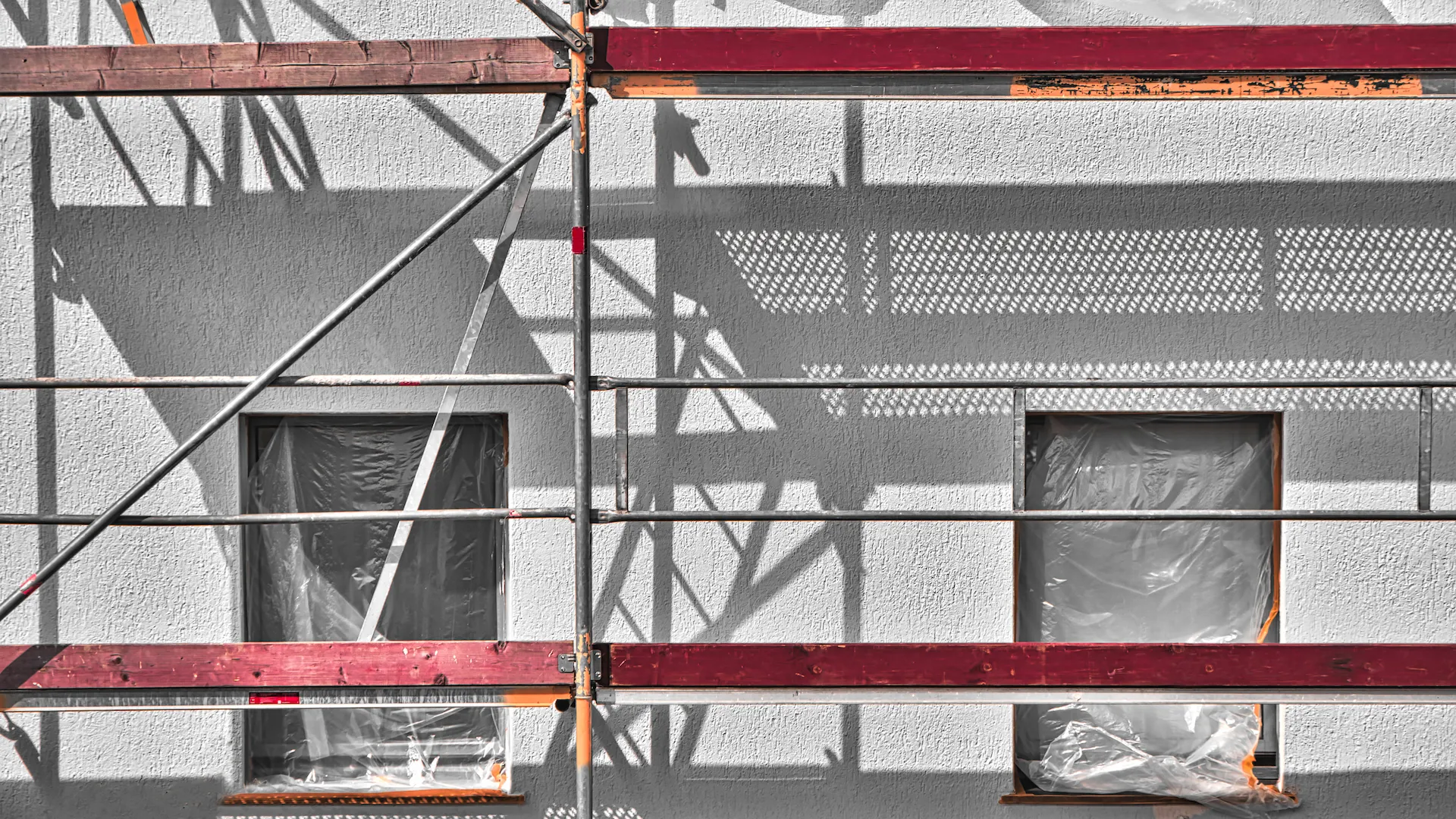
Fassadensanierung braucht man ein Gerüst auf der Baustelle
1. Cracks in the EIFS Finish
Small cracks may appear cosmetic, but they should not automatically be dismissed.
Cracking can occur because of movement, impact damage, thermal expansion and contraction, improper detailing, substrate movement, aging, or problems within the EIFS assembly.
Pay particular attention to:
- Cracks around windows and doors
- Cracks at corners
- Cracks near transitions between materials
- Horizontal or vertical cracking
- Repeated cracking in the same location
- Cracks that continue to expand
In a commercial building, recurring EIFS cracking may indicate an underlying building-envelope issue rather than simply a surface defect.
The takeaway: Don’t simply fill the crack and move on. A professional evaluation can help determine why the EIFS is cracking and whether moisture has entered the assembly.
2. Bubbling, Blistering, or Bulging
Bulging or blistering EIFS is a significant warning sign.
Areas that appear swollen, uneven, or detached may indicate moisture intrusion, loss of adhesion, substrate deterioration, or movement within the wall assembly.
These conditions can become more problematic when exposed to New England’s:
- Freeze-thaw cycles
- Heavy rain
- Snow and ice
- Wind-driven precipitation
- Temperature fluctuations
- Seasonal expansion and contraction
A professional EIFS contractor can determine whether the affected area requires localized repair or whether a larger portion of the assembly should be investigated.
3. Staining or Discoloration
Dark streaks, staining, algae growth, or unusual discoloration can indicate that water is repeatedly reaching areas of the exterior wall.
Look closely around:
- Window and door openings
- Roof-to-wall transitions
- Parapets
- Copings
- Expansion joints
- Wall penetrations
- Mechanical attachments
- Areas beneath flashing
- Transitions between EIFS and masonry
While not every stain indicates a major failure, persistent or recurring discoloration deserves investigation.
For property managers, this is particularly important because visible staining may be an early indicator of a larger water-management problem.
4. Failed or Deteriorated Sealants
Sealants are a critical component of an EIFS building envelope.
Over time, sealants can:
- Crack
- Shrink
- Harden
- Separate from adjacent surfaces
- Lose adhesion
- Develop gaps
- Deteriorate from UV exposure and weather
Failed sealants around windows, doors, joints, penetrations, and material transitions can provide pathways for water intrusion.
This is especially important in older commercial properties where sealants may have reached the end of their service life.
Don’t wait for interior leaks before investigating deteriorated exterior sealants.
5. Water Stains or Moisture Inside the Building
One of the most obvious warning signs is interior water damage.
Property managers should investigate:
- Water stains around windows
- Damp drywall
- Peeling paint
- Stained ceilings
- Musty odors
- Repeated leaks
- Damp insulation
- Deteriorated interior finishes
Interior damage does not necessarily mean the source is directly above the affected area.
Water can travel through wall assemblies before appearing inside the building.
That is why diagnosing the building envelope and exterior water-management system is often essential when investigating recurring leaks.
6. Soft, Spongy, or Damaged Areas
EIFS should not feel unusually soft or spongy.
If an area appears different from surrounding surfaces or responds differently when carefully evaluated, it may indicate deterioration behind the finish.
Potential contributing conditions can include:
- Moisture intrusion
- Deteriorated sheathing
- Damaged substrate
- Failed attachment
- Prolonged water exposure
- Improper drainage
- Previous repair deficiencies
This is a situation where professional assessment is particularly important because the visible EIFS finish may not tell the entire story.
7. Damage Around Windows and Doors
Window and door openings are some of the most critical areas of a commercial building envelope.
EIFS problems frequently become apparent around:
- Window heads
- Window sills
- Jambs
- Door frames
- Flashing
- Sealants
- Adjacent trim
- Transitions to masonry or other cladding
Massachusetts building requirements emphasize weather protection and proper flashing within exterior wall assemblies. The Massachusetts State Building Code’s exterior-wall provisions require exterior wall envelopes to provide weather resistance and address water-resistive barriers, drainage, and flashing.
Older EIFS installations should therefore receive particular attention around openings and transitions where water-management details may have deteriorated or been improperly executed.
8. Separation Between EIFS and Adjacent Materials
Commercial buildings rarely use EIFS in isolation.
EIFS may meet:
- Brick
- Stone
- Concrete
- Metal
- Glass
- PVC
- Clapboard siding
- Roofing systems
- Sheet-metal components
- Expansion joints
Movement between different materials can create stress at these transitions.
If you see gaps, cracking, separation, failed sealant, or deterioration where EIFS meets another material, the condition should be evaluated.
Transitions are often where water-management problems begin.
A qualified restoration contractor can evaluate the interface between materials and determine whether repairs should include EIFS, waterproofing, sealants, flashing, masonry, or another component of the building envelope.
9. Damaged EIFS From Impact or Maintenance Work
Commercial buildings experience constant activity.
EIFS can be damaged by:
- Ladders
- Landscaping equipment
- Snow-removal operations
- Construction
- Sign installation
- Mechanical equipment
- Vehicle impact
- Building maintenance
- Improper penetrations
Even a relatively small penetration can compromise the weather-resistant characteristics of the exterior wall assembly if it is not properly repaired and sealed.
This is why EIFS repairs should be completed using appropriate materials, detailing, and installation procedures rather than simply covering damaged areas with generic patching material.
10. Your Building Has a History of Recurring Water Intrusion
Perhaps the biggest warning sign is a pattern.
If your building has experienced recurring:
- Window leaks
- Wall leaks
- Interior moisture
- Mold or mildew concerns
- Repeated sealant repairs
- EIFS patching
- Deteriorating sheathing
- Water staining
- Masonry leaks
it may be time to stop treating each symptom individually and evaluate the building envelope as a whole.
Repeated repairs in the same location can indicate that the underlying source of water intrusion has not been fully addressed.
For commercial property owners, identifying the source of the problem can ultimately be more cost-effective than repeatedly repairing interior finishes or applying temporary exterior patches.
Why New England Weather Can Be Hard on EIFS
Commercial buildings in Massachusetts and throughout New England experience significant seasonal weather exposure.
The combination of rain, snow, ice, freezing temperatures, wind-driven rain, and repeated freeze-thaw cycles can place substantial demands on exterior wall assemblies.
A properly designed and maintained EIFS system is intended to manage these environmental conditions. However, failures in sealants, flashing, drainage, transitions, penetrations, or other components can allow moisture to enter areas where it can cause damage.
Massachusetts’ current 10th Edition State Building Code, 780 CMR, is based primarily on the 2021 International Building Code and includes Massachusetts-specific amendments. The current code addresses exterior walls and weather protection, including requirements concerning the exterior wall envelope, water-resistive barriers, drainage, and flashing.
Important: Building-code requirements can vary depending on the building, scope of work, applicable code provisions, permits, and project circumstances. Property owners should consult the applicable building official and qualified design/construction professionals when determining code compliance.
Why Professional EIFS Repair Matters
EIFS is a multi-component exterior wall system. Repairing only the visible damage without investigating the surrounding assembly may leave the underlying problem unresolved.
Professional EIFS repair may involve evaluating:
- Exterior finishes
- Base coats
- Insulation
- Substrate
- Sealants
- Flashing
- Water-resistive barriers
- Drainage paths
- Window and door interfaces
- Penetrations
- Material transitions
- Adjacent masonry
- Concrete
- Waterproofing components
The objective is not simply to make the wall look better.
The objective is to restore the performance and weather resistance of the building envelope while addressing the source of the deterioration.
ESI Waterproofing & Masonry Restoration: Commercial EIFS Repair in New England
For property managers, facility directors, municipalities, institutions, and commercial building owners, choosing the right contractor is critical when EIFS problems extend beyond a simple cosmetic repair.
ESI Waterproofing & Masonry Restoration, Inc. provides specialized exterior restoration and building-envelope services for commercial and institutional properties.
ESI’s services include:
- EIFS repair and new installations
- Stucco repair
- Commercial waterproofing
- Masonry restoration
- Concrete restoration
- Specialty coatings
- Historical restoration
- PVC and clapboard siding replacement
- Exterior building-envelope repairs
ESI specifically provides EIFS repair services for municipalities, educational institutions, and commercial clients, with a focus on restoring the durability and integrity of exterior wall systems.
ESI is also a DCAMM-certified contracting company, supporting its work with Massachusetts public-sector and institutional clients.
Don’t Wait Until an EIFS Problem Becomes a Major Restoration Project
The most expensive EIFS problems are often the ones that go unnoticed.
A small crack, failed sealant joint, or damaged transition may not seem urgent today. But if water repeatedly enters the building envelope, the resulting deterioration can extend beyond the visible EIFS surface.
Need Professional EIFS Repair or Building Envelope Restoration?
ESI Waterproofing & Masonry Restoration, Inc. can help property managers, facility directors, commercial owners, municipalities, and institutions evaluate and address EIFS, stucco, masonry, concrete, waterproofing, and exterior restoration concerns.
Request a professional, free inspection and estimate to determine what your building needs before a minor exterior issue becomes a major restoration project.