
For commercial buildings throughout Massachusetts and New England, roof drainage systems are often overlooked until leaks, staining, or masonry damage become impossible to ignore. While roofs are designed to shed water away from a structure, clogged drains, damaged gutters, improperly pitched roofs, and failing downspouts can direct excessive moisture directly onto masonry surfaces.
Over time, these drainage failures accelerate brick, stone, concrete, and mortar deterioration, leading to costly repairs, safety concerns, and tenant complaints.
At ESI Waterproofing & Masonry Restoration Inc., we frequently identify roof drainage deficiencies as the root cause of masonry failures throughout commercial buildings, multifamily properties, parking structures, educational facilities, and healthcare campuses across New England.
Why Proper Roof Drainage Matters
Water is one of the most destructive forces affecting a building envelope. A properly functioning roof drainage system should quickly channel rainwater and snowmelt away from the structure.
When drainage systems fail, water begins to:
- Saturate brick and stone facades
- Penetrate mortar joints
- Leak behind cavity walls
- Damage parapet walls
- Corrode embedded steel supports
- Accelerate freeze-thaw deterioration
- Cause interior water infiltration
In New England’s harsh climate, where buildings regularly experience snow accumulation, ice dams, heavy rainfall, and repeated freeze-thaw cycles, even minor drainage problems can create significant masonry deterioration.
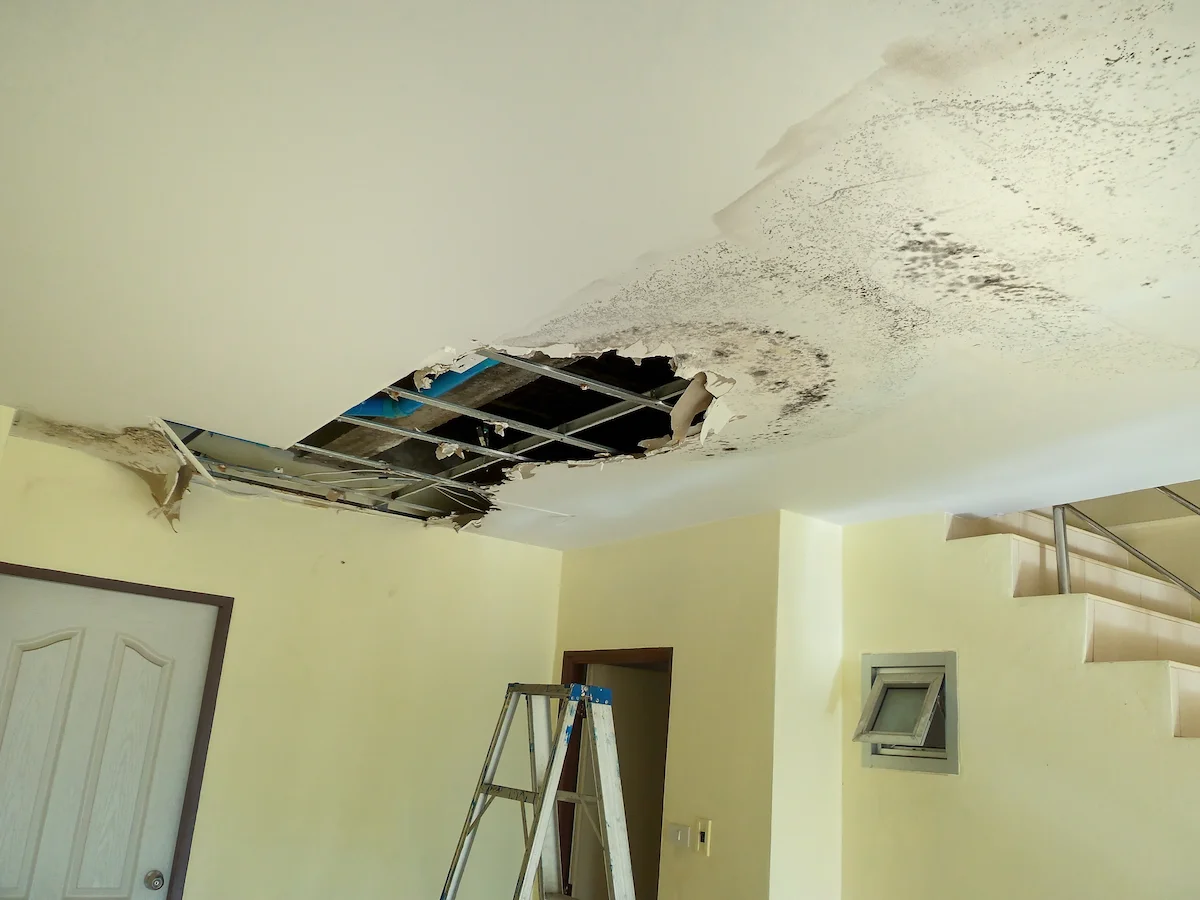
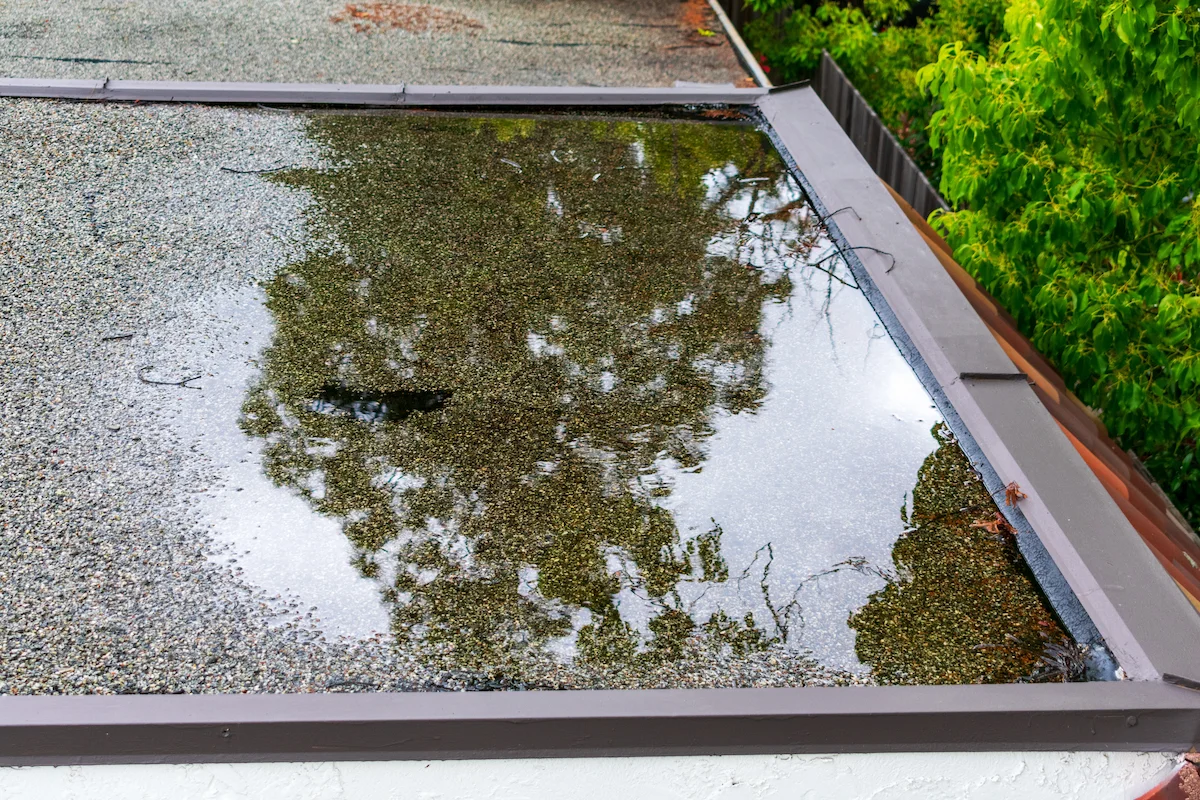
Common Roof Drainage Problems That Damage Masonry
1. Clogged Roof Drains
Leaves, debris, roofing materials, and sediment can block roof drains and create standing water on flat roofs.
As water ponds on the roof, it seeks the path of least resistance, often finding its way into:
- Masonry wall systems
- Expansion joints
- Roof-to-wall transitions
- Flashing assemblies
Prolonged exposure can weaken mortar joints and increase the likelihood of leaks.
2. Overflowing Gutters
Gutters designed to manage roof runoff can become overwhelmed when clogged or undersized.
Overflowing water frequently cascades down masonry facades, resulting in:
- Efflorescence
- Surface staining
- Mortar erosion
- Spalling brick
- Biological growth
Over time, this repeated saturation significantly reduces the lifespan of masonry materials.
3. Failed Downspouts
Downspouts that are disconnected, damaged, or improperly terminated can direct large volumes of water directly against building walls.
This concentrated moisture exposure often causes:
- Foundation settlement concerns
- Brick deterioration
- Cracked mortar joints
- Water infiltration into interior spaces
4. Poor Roof Slope
Flat and low-slope commercial roofs must maintain adequate pitch toward drains. Improper drainage design or structural settlement can create ponding water conditions.
Persistent ponding increases hydrostatic pressure and moisture migration into adjacent masonry assemblies.
5. The Freeze-Thaw Cycle: New England’s Biggest Threat
One of the most damaging consequences of poor drainage is freeze-thaw deterioration.
When masonry absorbs water, that moisture expands approximately 9% when frozen. This repeated expansion and contraction places tremendous stress on bricks, mortar joints, and concrete surfaces.
Common signs include:
- Spalling brick faces
- Cracked mortar joints
- Delaminated stone
- Concrete scaling
- Loose masonry units
Buildings throughout Massachusetts, Rhode Island, Connecticut, and New Hampshire are particularly vulnerable due to frequent winter freeze-thaw cycles.
Warning Signs Property Managers Should Watch For
Many drainage-related masonry issues develop slowly over several years.
Warning signs include:
- White powdery deposits (efflorescence)
- Water stains on brick or stone
- Cracked or missing mortar joints
- Vegetation growth on masonry surfaces
- Rust staining
- Spalled brick faces
- Interior leaks near exterior walls
- Deteriorated parapet walls
- Standing water on roof surfaces
Early detection can dramatically reduce repair costs.
Massachusetts Building Code and Industry Considerations
Commercial property owners should understand that building envelope performance and drainage management are addressed through multiple code and industry standards.
Relevant references include:
Massachusetts State Building Code (780 CMR)
The Massachusetts State Building Code, based upon the International Building Code (IBC), requires buildings to be constructed and maintained to resist water intrusion and properly manage roof drainage systems.
Key areas include:
- Roof drainage design requirements
- Exterior wall weather protection
- Flashing installation requirements
- Structural maintenance obligations
International Property Maintenance Code (IPMC)
Many municipalities utilize maintenance standards that require building owners to address:
- Unsafe masonry conditions
- Water infiltration issues
- Deteriorated exterior walls
- Structural hazards resulting from neglect
OSHA & Occupant Safety Considerations
When masonry deterioration creates falling debris hazards, property owners and facility managers may face increased liability exposure for occupants, visitors, contractors, and maintenance personnel.
Routine inspections help identify risks before they become safety concerns.
The Financial Impact of Ignoring Drainage Issues
Deferred maintenance often turns a minor drainage repair into a major restoration project.
- What may begin as:
- A clogged drain
- A damaged scupper
- A disconnected downspout
Can eventually lead to:
- Large-scale tuckpointing
- Brick replacement
- Structural steel repairs
- Waterproofing restoration
- Interior water damage claims
- Tenant disruptions
- Increased insurance scrutiny
Addressing drainage deficiencies early is almost always less expensive than replacing deteriorated masonry systems.
How ESI Waterproofing & Masonry Restoration Can Help
At ESI Waterproofing & Masonry Restoration Inc., we specialize in identifying and correcting the underlying causes of masonry deterioration—not simply repairing the visible damage.
Our services include:
- Building envelope inspections
- Masonry, EIFS, &PVC siding restoration
- Tuckpointing and repointing
- Leak investigations
- Waterproofing systems
- Sealant replacement
- Parapet wall restoration
- Structural masonry repairs
- Commercial facade restoration
Our team works with property managers, facility directors, condominium associations, engineers, and commercial building owners throughout Massachusetts and the greater New England region to develop cost-effective restoration solutions that protect assets and extend building life.
Protect Your Building Before Small Problems Become Major Repairs
Schedule a free Masonry and Waterproofing Evaluation with ESI today. ESI Waterproofing & Masonry Restoration Inc. helps commercial property owners throughout Massachusetts and New England identify drainage-related masonry problems before they become major liabilities.
Visit www.esiwaterproofingmasonryrestoration.com to schedule an inspection and learn how our waterproofing and restoration specialists can help protect your building investment.