
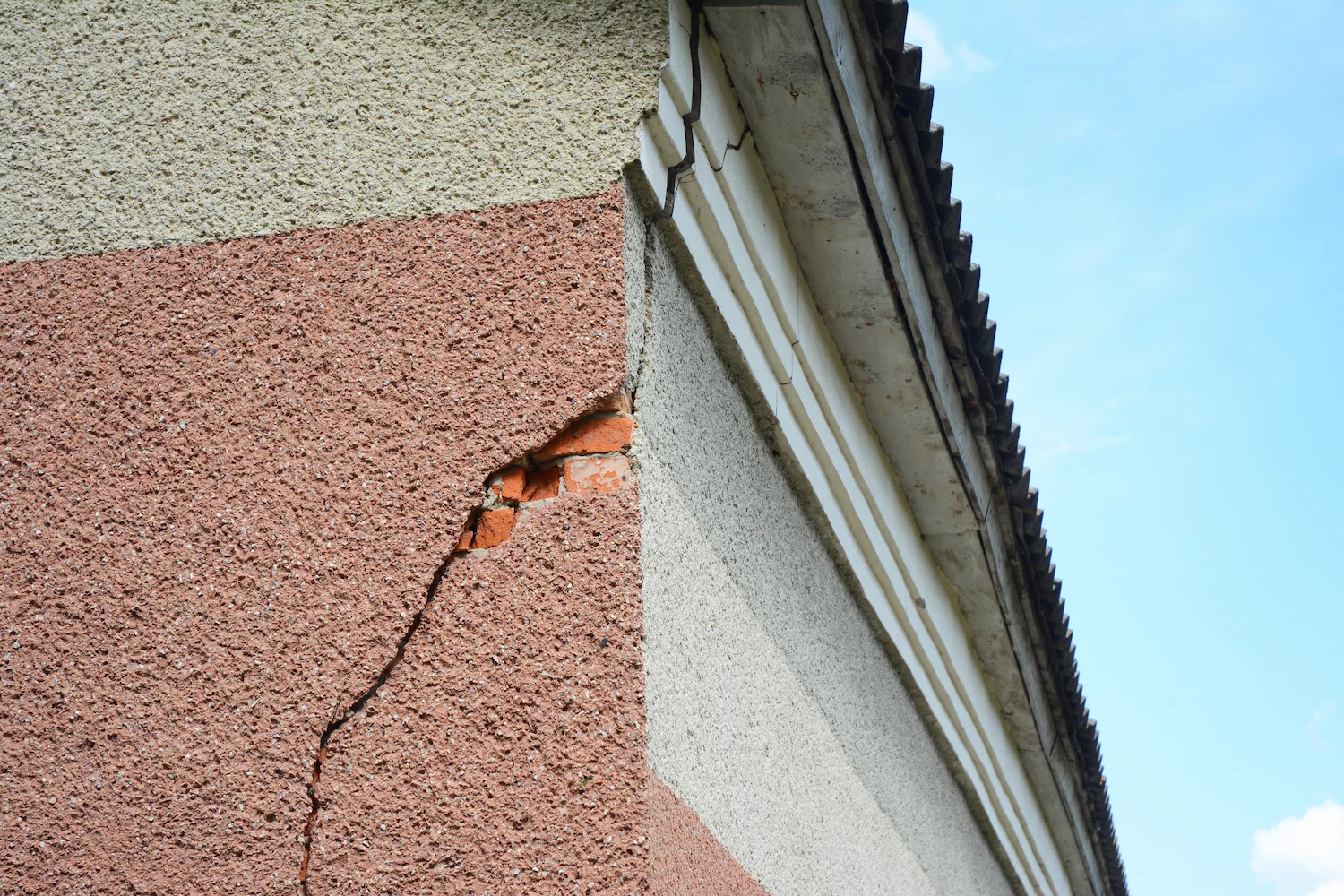
New England winters can be especially demanding on commercial building exteriors. Repeated temperature fluctuations, freezing rain, snow, ice, and wind-driven moisture can gradually compromise stucco, allowing minor cracks and exterior defects to develop into more extensive building-envelope problems.
For commercial property managers, facility directors, and building owners, understanding how freeze-thaw cycles affect stucco is essential to protecting the building envelope, controlling maintenance expenses, and extending the service life of exterior walls.
Stucco is a durable exterior finish when properly installed and maintained. However, when water penetrates cracks, deteriorated sealants, failed flashing, or other vulnerable areas, freezing temperatures can accelerate deterioration. Damage may extend beyond the visible finish to the underlying substrate, insulation, sheathing, and other wall components.
Throughout Massachusetts, Rhode Island, Connecticut, and New Hampshire, proactive stucco inspections and timely waterproofing repairs can help identify these problems before they develop into larger restoration projects.
ESI Waterproofing & Masonry Restoration, Inc. provides commercial exterior restoration solutions, including stucco repair, EIFS repair, waterproofing, masonry restoration, concrete restoration, historical restoration, and PVC and clapboard siding replacement.
What Are Freeze-Thaw Cycles, and Why Do They Damage Stucco?
A freeze-thaw cycle occurs when moisture freezes as temperatures fall below freezing and subsequently thaws as temperatures rise.
The greatest concern for stucco is not simply cold weather. It is the combination of moisture, vulnerable materials, and repeated temperature fluctuations.
Water can enter an exterior wall through hairline cracks, deteriorated sealants, improperly detailed window openings, damaged flashing, and other deficiencies. When that moisture becomes trapped within the stucco assembly or its underlying materials, freezing conditions can contribute to cracking, separation, and deterioration.
As temperatures fluctuate throughout a New England winter, these processes can repeat many times.
Over time, repeated moisture exposure and freezing conditions can contribute to:
- Cracked or deteriorated stucco finishes
- Separation between stucco layers or between the finish and its substrate
- Bulging, blistering, or delaminated areas
- Deterioration of underlying sheathing and other wall components
- Moisture-related damage to framing and insulation
- Corrosion of metal components where moisture reaches susceptible materials
- Interior water staining and damage to finishes
- More extensive exterior restoration requirements
The severity of the damage depends on factors such as the stucco system, the materials used, the amount of moisture present, the condition of the underlying wall assembly, and the quality of the original installation.
For commercial buildings, identifying and correcting the source of moisture is just as important as repairing the visible stucco damage.
5 Warning Signs of Freeze-Thaw Damage to Commercial Stucco
Property managers and facility directors should pay close attention to exterior stucco conditions before winter, during seasonal inspections when conditions permit, and after the winter thaw.
1. Cracks in the Stucco Finish
Cracking is one of the most visible signs of potential stucco deterioration.
Small cracks may result from normal material movement, shrinkage, settlement, thermal expansion and contraction, or other causes. However, cracks can also create pathways for water to enter the wall assembly.
When moisture reaches susceptible materials and temperatures drop, repeated freezing and thawing can worsen existing deficiencies.
Pay particular attention to cracks around:
- Windows and doors
- Building corners
- Parapets and roof-to-wall transitions
- Expansion and control joints
- Areas where stucco meets brick, concrete, metal, or siding
- Exterior penetrations and mechanical equipment
Cracks should be evaluated in context rather than automatically treated as cosmetic defects. Their size, pattern, location, and progression can help determine whether further investigation is necessary.
2. Bulging, Blistering, or Delaminating Stucco
Stucco that appears swollen, blistered, detached, or uneven may indicate a loss of adhesion or deterioration within the wall assembly.
Moisture intrusion can contribute to these conditions, particularly when water enters through defective joints or flashing and remains trapped behind the finish.
Freeze-thaw exposure may worsen existing weaknesses, potentially causing additional separation or material loss.
For commercial property owners, this type of deterioration deserves prompt professional evaluation. Loose or detached exterior materials may present falling-material hazards, particularly above entrances, pedestrian walkways, parking areas, and occupied spaces.
Avoid striking, scraping, or attempting to remove questionable material without an appropriate assessment.
3. Water Staining, Efflorescence, or Discoloration
Dark stains, persistent damp areas, white mineral deposits, or unusual discoloration may indicate recurring moisture exposure.
Efflorescence occurs when water carries soluble salts through a porous material and leaves mineral deposits as the water evaporates. Although efflorescence alone does not establish the severity or source of a problem, it can be a useful indicator of moisture movement.
On stucco-clad commercial buildings, staining or mineral deposits near windows, rooflines, parapets, wall transitions, and lower elevations may warrant further investigation.
Simply cleaning the surface may improve its appearance without correcting the underlying water-entry point.
A more durable repair strategy begins with identifying how water is entering the wall and how the assembly is intended to drain or manage that moisture.
4. Deteriorated Sealants and Failed Flashing
Stucco systems rely on properly detailed transitions and moisture-management components to help protect the underlying wall assembly.
Sealants around windows, doors, penetrations, and joints can deteriorate with age and exposure. Flashing can also become damaged, improperly integrated, or less effective at directing water away from vulnerable areas.
When these components fail, rainwater and melting snow may enter locations that are difficult to inspect from the exterior.
During winter, repeated freezing and thawing can compound existing problems.
Common areas to inspect include:
- Window and door perimeters
- Roof-to-wall intersections
- Parapet caps and coping systems
- Balconies and projecting architectural features
- Wall penetrations and mounted equipment
- Transitions between stucco, EIFS, masonry, and siding
- Areas where water collects or repeatedly runs down the façade
Sealant replacement alone may not resolve a problem if the underlying flashing, drainage, or substrate is also deficient.
5. Interior Water Damage or Persistent Musty Odors
Some of the most consequential stucco-related moisture problems begin outside but become noticeable indoors.
Potential warning signs include:
- Water stains on interior walls or ceilings
- Peeling paint or deteriorating interior finishes
- Persistent musty odors
- Dampness near exterior walls
- Recurring leaks after rain or snowmelt
- Unexplained deterioration near windows or exterior corners
These symptoms can have multiple causes, so they should not automatically be attributed to stucco.
However, when interior moisture symptoms coincide with exterior cracking, staining, failed sealants, or deteriorated flashing, a building-envelope assessment may help determine whether the exterior wall assembly is contributing to the problem.
Prompt investigation can help property managers identify the source and prioritize appropriate repairs.
Why New England Commercial Buildings Face Elevated Stucco Risks
Commercial buildings throughout Massachusetts, Rhode Island, Connecticut, and New Hampshire experience seasonal weather patterns that place ongoing demands on exterior wall systems.
Massachusetts: Boston, Worcester, and the Greater Boston Area
Commercial and institutional buildings throughout Massachusetts experience winter precipitation, temperature fluctuations, snow accumulation, and wind-driven rain.
Older buildings may also contain aging sealants, historic materials, previous repairs, or multiple generations of exterior construction.
For property managers in Boston, Cambridge, Worcester, Springfield, and surrounding communities, exterior maintenance should account for the condition of the entire wall assembly—not simply the appearance of the stucco finish.
Where a property has historic or architecturally significant features, repair methods and materials should be selected with appropriate consideration for the existing construction.
Rhode Island: Providence and Surrounding Communities
Commercial buildings in Providence, Warwick, Cranston, and coastal Rhode Island communities may experience a combination of winter freezing, wind-driven rain, snow, and coastal moisture exposure.
Building corners, exposed façades, parapets, and transitions between exterior materials deserve attention during routine maintenance.
Where water repeatedly reaches vulnerable areas, correcting the entry point is essential to reducing the likelihood of recurring deterioration.
Connecticut: Hartford, New Haven, and Commercial Property Corridors
Buildings throughout Hartford, New Haven, Stamford, and other Connecticut communities experience seasonal temperature fluctuations and moisture exposure that can affect stucco and associated exterior components.
Commercial property managers should monitor cracks, deteriorated sealants, water staining, and areas where stucco meets windows, masonry, or siding.
For larger properties, documenting exterior conditions and establishing a prioritized repair plan can help coordinate maintenance across multiple buildings or elevations.
New Hampshire: Manchester, Nashua, and Southern New Hampshire
New Hampshire’s winter conditions can expose commercial buildings to prolonged freezing periods, snow, ice, and repeated temperature changes.
For properties in Manchester, Nashua, Concord, and surrounding communities, proactive exterior maintenance is particularly important where existing cracks or water-entry points may allow moisture to remain within vulnerable wall components.
Addressing defects before winter can reduce exposure during the season when exterior repairs may become more difficult because of temperature, precipitation, and material-installation limitations.
Regional takeaway: Across all four states, the primary objective is to prevent uncontrolled moisture intrusion, identify existing deterioration, and restore the exterior wall system using repair methods appropriate for the specific building.
How Freeze-Thaw Damage Can Affect the Entire Building Envelope
Stucco is only one component of a commercial building’s exterior enclosure.
When moisture passes behind the visible finish, its effects can extend to adjacent materials and concealed components.
Damage to Sheathing, Framing, and Insulation
Where the wall assembly contains moisture-sensitive sheathing, wood framing, insulation, or other vulnerable components, persistent water intrusion can contribute to deterioration.
Depending on the materials and conditions, prolonged moisture exposure may also create conditions conducive to mold growth.
The presence of exterior stucco does not, by itself, establish whether the wall assembly is adequately protected against moisture.
The condition of the water-resistive barrier, flashing, drainage provisions, sealants, and substrate should be considered as part of an appropriate evaluation.
Deterioration at Masonry and Concrete Transitions
Commercial properties often combine stucco with brick, stone, concrete, EIFS, and other exterior materials.
Transitions between these materials can be vulnerable when joints, flashing, or sealants are improperly detailed or deteriorated.
Moisture entering at one location can affect adjacent materials, making it important to consider the overall building envelope when planning repairs.
ESI’s masonry restoration, concrete restoration, and waterproofing capabilities can be relevant when stucco deficiencies occur alongside deterioration in connected exterior systems.
Damage to Interior Finishes and Building Operations
Water intrusion can damage interior finishes and disrupt building operations.
Depending on the property’s use, repairs may affect tenant spaces, offices, common areas, entrances, or other occupied locations.
For facility directors and commercial property managers, early identification and coordinated repair planning can help reduce avoidable disruption.
The objective is not simply to restore the exterior appearance. It is to address the underlying deficiency and help protect the building from continued moisture exposure.
How to Prevent Freeze-Thaw Damage to Stucco
A proactive maintenance program can help identify exterior vulnerabilities like freeze-thaw damage before they lead to more extensive deterioration.
1. Schedule a Professional Stucco and Building-Envelope Inspection
Have qualified professionals evaluate the visible stucco finish and relevant moisture-management details.
Depending on the building and the observed conditions, an assessment may include visual inspection, targeted moisture investigation, review of flashing and sealants, or additional diagnostic testing.
The appropriate approach depends on the wall system, the property’s history, and the evidence of deterioration.
2. Repair Cracks Using System-Compatible Materials
Stucco repair materials and methods should be selected based on the existing system, the cause of the damage, and the location of the defect.
Not every crack should be treated with the same sealant or patching compound.
Repairs that do not account for material compatibility, movement, drainage, or the source of moisture may fail to provide a durable solution.
3. Correct Water Entry Points
Review the condition of flashing, sealants, coping, joints, and transitions where water may enter the wall assembly.
If moisture is getting behind the stucco, repairing the visible finish without addressing the entry point may lead to recurring problems.
The goal is to manage water appropriately and direct it away from vulnerable building components.
4. Evaluate Concealed Moisture When Conditions Warrant
Visible stucco damage does not always reveal the full extent of deterioration.
Where evidence suggests moisture may be trapped behind the finish, further investigation may be necessary to assess the substrate and associated wall components.
The need for invasive testing or opening the wall should be determined by the observed conditions and the proposed diagnostic strategy.
5. Plan Repairs Around Seasonal Conditions
Exterior restoration work must account for temperature, precipitation, substrate conditions, and the manufacturer’s installation requirements.
Some stucco materials, coatings, sealants, and waterproofing products have specific environmental limitations.
Property managers should arrange evaluations early enough to identify work that can be completed before winter and work that requires appropriate conditions during a later repair window.
Avoid applying coatings or patching materials in unsuitable weather simply to complete work before a freeze.
6. Maintain a Documented Exterior Maintenance Program
For commercial and multifamily properties, documented inspections can help identify recurring issues and support capital planning.
Useful records include:
- Inspection dates and weather-related observations
- Photographs of cracks, stains, and deteriorated areas
- Locations of previous stucco and waterproofing repairs
- Records of recurring leaks or interior moisture
- Sealant, flashing, and drainage-related maintenance
- Recommendations and repair priorities
- Follow-up inspection findings
A documented approach helps property managers distinguish new deterioration from longstanding conditions and coordinate repairs across multiple buildings.
Massachusetts Building Code Considerations for Stucco and Moisture Management
Building codes establish requirements for exterior wall construction and weather protection. These requirements are relevant when evaluating certain stucco-related deficiencies and planning commercial restoration work.
Massachusetts: 780 CMR, the Massachusetts State Building Code
Massachusetts regulates building construction through 780 CMR, the Massachusetts State Building Code. The applicable edition and requirements depend on the type of project and the provisions in effect for the work.
For commercial properties, the code’s exterior-wall provisions are relevant to issues involving weather protection, water-resistive barriers, flashing, and the management of water within exterior wall assemblies.
The technical provisions applicable to a particular stucco system depend on the building type, the construction method, and the scope of work.
Property owners should consult the applicable code provisions and qualified design professionals when evaluating proposed repairs or alterations.
Official reference: Massachusetts State Building Code — 780 CMR
International Building Code: Exterior Wall Weather Protection
The International Building Code (IBC) includes provisions addressing exterior walls, weather protection, flashing, and water-resistive barriers. The applicable requirements are incorporated into state building codes with jurisdiction-specific amendments.
These provisions help establish the regulatory framework for protecting wall assemblies against water intrusion.
They should not be interpreted as a blanket requirement that every existing stucco building must be rebuilt or retrofitted in the same way.
Existing Buildings and Restoration Work
Repairing an existing stucco façade is not necessarily equivalent to constructing a new exterior wall.
Applicable requirements may depend on the extent of the repair, whether structural components are affected, whether the work constitutes an alteration, the building’s occupancy and construction type, and other project-specific factors.
Before undertaking substantial exterior restoration, confirm the applicable requirements with the local building official and, where appropriate, the architect or engineer responsible for the project.
Important: This section provides general information, not a code-compliance determination. Massachusetts, Rhode Island, Connecticut, and New Hampshire have jurisdiction-specific requirements and amendments. Verify the applicable code edition, permit requirements, and technical provisions with the authority having jurisdiction before beginning work.
Why Commercial Property Owners Choose ESI Waterproofing & Masonry Restoration, Inc.
When stucco begins to deteriorate, the most effective repair strategy starts with understanding the building and the conditions affecting its exterior.
ESI Waterproofing & Masonry Restoration, Inc. specializes in exterior restoration and building-envelope services for commercial, institutional, municipal, and other properties throughout Massachusetts and New England.
Our capabilities include:
Commercial Stucco Repair
Addressing cracked, deteriorated, or damaged stucco and evaluating related exterior conditions.
EIFS Repair and Installation
Repairing exterior insulation and finish systems and addressing associated exterior-envelope deficiencies.
Commercial Waterproofing
Commercial waterproofing helps protect buildings against water intrusion through appropriate waterproofing and moisture-management solutions.
Masonry Restoration
Restoring deteriorated masonry, mortar joints, and related exterior components.
Concrete Restoration
Addressing deteriorated concrete and related exterior restoration needs.
Historical Restoration
Supporting the restoration of historic and architecturally significant buildings with consideration for their existing materials and construction.
PVC and Clapboard Siding Replacement
Replacing deteriorated siding as part of a broader exterior maintenance or restoration strategy.
ESI’s broad service capabilities are particularly relevant when stucco damage occurs alongside deteriorated masonry, concrete, sealants, flashing, or adjacent siding.
Rather than treating every visible defect as an isolated problem, property owners can evaluate related exterior conditions and prioritize the work necessary to protect their buildings.
Learn more about ESI’s services: https://www.esiwaterproofingmasonryrestoration.com/
When Should You Schedule a Stucco Inspection?
Commercial property managers should consider arranging a professional evaluation when they observe:
- New or expanding cracks in stucco
- Bulging, loose, or detached exterior material
- Recurring water stains or interior leaks
- Deteriorated sealants around windows and doors
- Water intrusion after heavy rain or snowmelt
- Visible damage near rooflines, parapets, or wall transitions
- Repeated repairs that have not resolved the underlying problem
- Deterioration affecting multiple exterior materials
A professional evaluation can help determine whether the issue involves localized stucco repair, a broader waterproofing deficiency, concealed moisture, or deterioration affecting multiple components of the building envelope.
Where loose exterior materials create a potential falling hazard, restrict access to the affected area and arrange prompt professional assessment.
The best time to investigate moisture-related stucco damage is before it becomes an extensive restoration problem. However, visible damage or active water intrusion should be evaluated promptly regardless of the season.
Protect Your Commercial Building Before the Next New England Winter
Freeze-thaw cycles can accelerate deterioration when moisture enters vulnerable stucco assemblies. Cracks, failed sealants, damaged flashing, and inadequate moisture management may allow water to reach the materials behind the exterior finish.
For commercial property managers, facility directors, and building owners, the most effective approach combines routine inspections, timely repairs, appropriate waterproofing, and a clear understanding of the building’s exterior wall system.
ESI Waterproofing & Masonry Restoration, Inc. provides commercial stucco repair, EIFS repair, waterproofing, masonry restoration, concrete restoration, historical restoration, and PVC and clapboard siding replacement throughout Massachusetts and New England.
Seeing Cracks or Water Stains on Your Commercial Stucco Building?
Cracks, deteriorated sealants, and recurring water stains can indicate underlying exterior wall problems. ESI Waterproofing & Masonry Restoration, Inc. provides commercial stucco repair, waterproofing, and exterior restoration services throughout New England.
Contact ESI to discuss your property’s condition and potential repair needs.
Disclaimer: This article is provided for general informational and educational purposes only and is not a substitute for a project-specific inspection, professional advice, or applicable building codes and regulations. Building conditions, materials, and requirements vary by property and jurisdiction. Recommendations should be evaluated by qualified professionals based on the specific project. External resources are provided for informational purposes only; their inclusion does not imply endorsement of ESI Waterproofing & Masonry Restoration Inc. by the referenced organizations.